


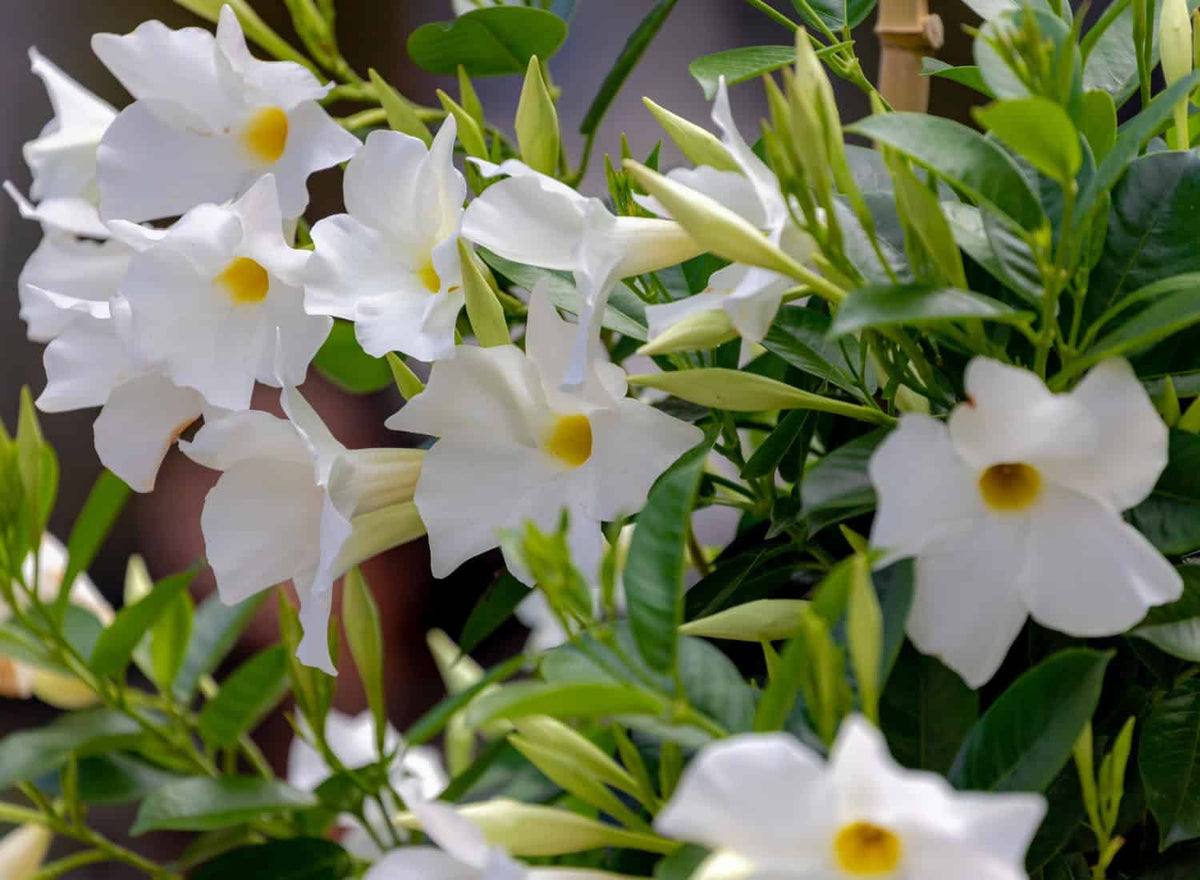
Just planted one? Start here: Shop mandevilla & dipladenia plants.
If you want the complete care routine (light, watering, overwintering), save the Mandevilla plant care guide or the Dipladenia care guide.
Now let’s talk about the biggest bloom multiplier: fertilizer.
What Fertilizer Should Accomplish (Blooms + Steady Growth)
The goal of fertilizing mandevilla and dipladenia isn’t just growth, it’s consistent flowering without weak, leggy stems.
A good fertilizer program should:
- Encourage strong root development
- Support steady new growth
- Promote repeat blooming
- Avoid excessive leafy growth at the expense of flowers
If your plant is green but not blooming well, fertilizer balance is often the missing piece.
N-P-K Basics (What to Prioritize for Flowering)
Every fertilizer label lists three numbers, N-P-K.
- N (Nitrogen) = leafy growth
- P (Phosphorus) = root development + flowering support
- K (Potassium) = overall plant strength and bloom performance
What to Avoid
High nitrogen formulas can cause the classic problem: “all leaves, no flowers.”
Too much nitrogen pushes lush green growth but reduces bloom production.
What to Look For Instead
Choose a balanced or bloom-supporting fertilizer where:
- Nitrogen is moderate
- Phosphorus is not excessively high
- Potassium is strong enough to support flowering
Balanced formulas or bloom-focused blends work best during active growth.
A Warm-Season Feeding Schedule (Containers vs In-Ground)
Container Plants
Container-grown plants need more frequent feeding because nutrients leach out faster during watering.
During warm growing season:
- Feed every 2–4 weeks with a balanced or bloom-supporting fertilizer
- Water thoroughly between feedings
- Never fertilize dry soil (water lightly first)
Strong vertical growers respond especially well to consistent feeding. Browse examples here: Shop mandevilla vines
In-Ground Plants
Plants established in the ground typically require less frequent feeding.
- Feed every 4–6 weeks during active growth
- Reduce as temperatures cool
- Stop feeding once growth slows significantly
Compact options benefit from the same schedule. See: Shop dipladenia vines
Winter Rule
If you overwinter indoors, stop fertilizing.
Reduced light means reduced growth. Feeding during dormancy can stress roots.
How to Avoid Salt Buildup and “All Leaves, No Flowers”
Salt Buildup
Overfeeding container plants can lead to salt accumulation in soil.
Symptoms include:
- Brown leaf tips
- White crust on soil surface
- Sudden decline despite watering
Fix: Flush the container thoroughly with water to rinse excess salts out of drainage holes.
Too Much Nitrogen
If your plant is:
- Tall and leafy
- Growing fast
- But barely blooming
Switch to a lower-nitrogen, bloom-supporting fertilizer.
Micronutrients and “Mystery Symptoms”
Sometimes problems aren’t about N-P-K at all.
If Leaves Pale or Yellow Between Veins
This may signal micronutrient imbalance (like iron deficiency).
Use a complete fertilizer that includes trace elements.
If Buds Form but Don’t Open
This is often a consistency issue:
- Inconsistent watering
- Low light
- Stress from moving locations
Fertilizer helps, but it works best when paired with proper light and watering.
The Easiest Way to Stay Consistent
The secret isn’t complicated, it’s routine.
- Strong light (6+ hours outdoors)
- Even moisture (never soggy, never bone dry)
- Regular feeding during warm growth
- No feeding during winter rest
Pair fertilizer with proper watering from our Mandevilla plant care guide and Dipladenia care guide for maximum bloom performance.
Strong Bloomers That Respond Well to Proper Feeding
Want bold tropical color all season? Shop mandevilla & dipladenia plants and build your feeding routine from day one.


