


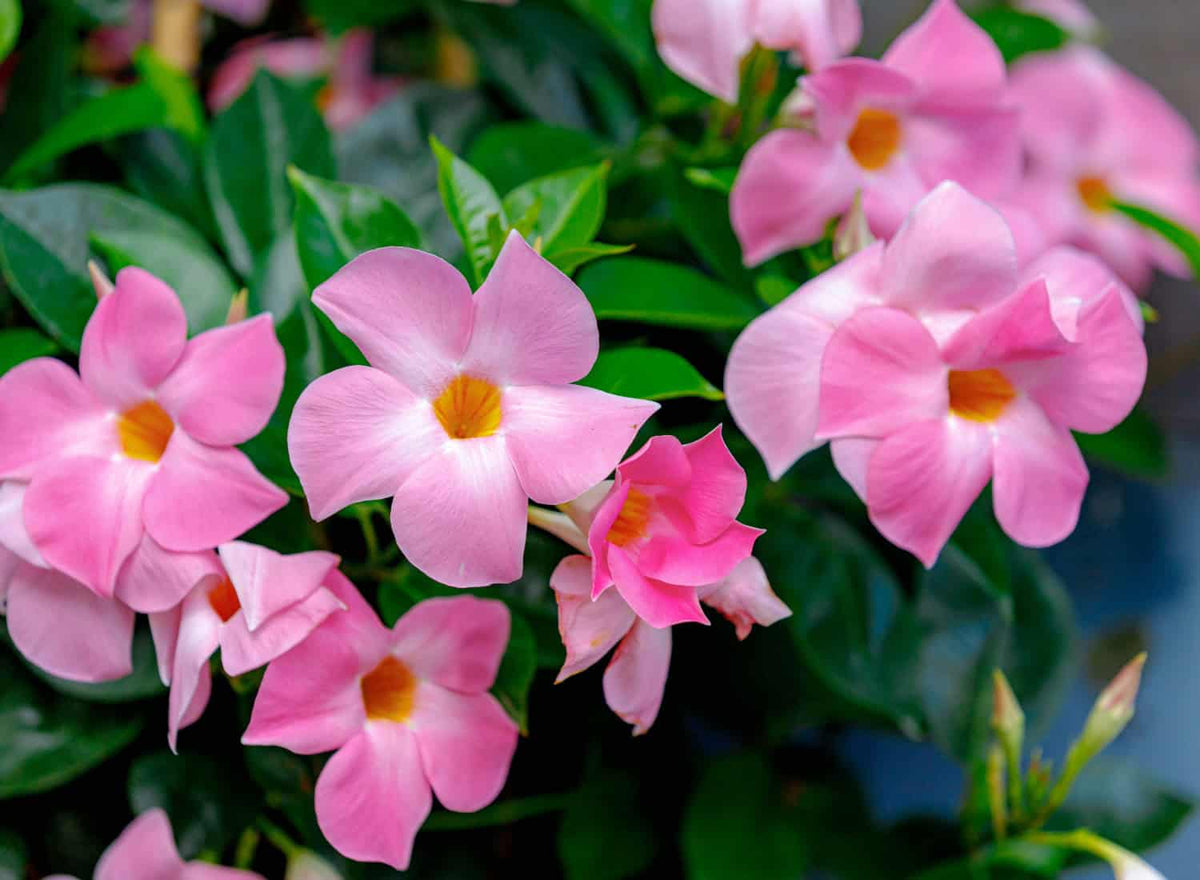
First things first: If you’re still choosing a plant, start here, shop mandevilla & dipladenia plants.
If you already have one, don’t panic. Most bloom problems come down to four simple issues: light, watering consistency, fertilizer balance, or stress.
Use this guide to diagnose fast, and fix it.
The Fastest Diagnosis: Blooms Need Light + Consistency
Mandevilla and dipladenia are tropical bloomers. They don’t flower heavily by accident.
If your plant isn’t blooming, ask yourself:
- Is it getting strong, direct light?
- Is watering consistent (not drought cycles, not soggy soil)?
- Is fertilizer balanced?
- Has it recently been moved?
Fix those first before assuming something is “wrong.”
Not Enough Sun (What “Enough” Looks Like)
This is the #1 cause of “mandevilla not blooming.”
These plants thrive in bright outdoor light and generally perform best with 6+ hours of direct sun.
Signs Light Is Too Low
- Lots of green growth, few flowers
- Long, stretchy stems
- Slow bud formation
Fix
- Move to a brighter location.
- Choose a south- or west-facing exposure.
- Avoid deep shade under patios or overhangs.
Looking for strong vertical bloomers? Shop mandevilla vines
Water Stress + Drainage Problems
Your Mandevilla plant care guide emphasizes this clearly: even moisture drives bloom performance.
Overwatering Symptoms
- Yellow lower leaves
- Soft stems
- Buds forming but dropping
Underwatering Symptoms
- Buds dropping before opening
- Leaves curling
- Plant wilting repeatedly
The Fix
- Use the top 1–2 inch soil test.
- Water deeply, then allow drainage.
- Never let pots sit in standing water.
Compact patio options respond quickly to consistent moisture: Shop dipladenia plants
Fertilizer Imbalance (Too Much Nitrogen, Salt Buildup)
If your plant is tall and leafy but not blooming, nitrogen may be too high.
Classic “All Leaves, No Flowers” Sign
- Fast green growth
- Very few buds
Switch to a balanced or bloom-supporting fertilizer during warm growth.
Salt Buildup Symptoms
- Brown leaf tips
- White crust on soil
- Sudden decline
Fix by flushing the container thoroughly to rinse excess fertilizer salts.
Stress From Moving or Temperature Shifts
Mandevilla and dipladenia dislike sudden changes.
Common Stress Triggers
- Moving from nursery to patio
- Bringing indoors for winter
- Cold nights below mid-40s°F
- Sudden heat spikes
What’s Normal
- Temporary leaf drop
- Short pause in blooming
What’s Not Normal
- Persistent yellowing
- Black stems
- Mushy roots
After relocation, give plants 1–2 weeks to adjust before expecting new blooms.
Two-Week “Bloom Reset” Action Plan
Day 1
- Move to brightest possible location.
- Check drainage holes.
- Water deeply if soil is dry.
Day 7
- Begin balanced feeding if in active growth.
- Maintain consistent moisture.
Day 14
- Look for new buds forming.
- Check stem tips for active growth.
Most plants respond within 1–3 weeks once light and watering are corrected.
What to Buy If You Want the Easiest Bloomer
If you’re starting fresh and want high bloom performance from day one, choose strong, vigorous varieties.
Prefer compact growers? Shop dipladenia vines
Want the full bloom routine beyond troubleshooting? Bookmark the Mandevilla plant care guide and stay consistent.
Ready to start over with a strong performer? Shop mandevilla & dipladenia plants


