


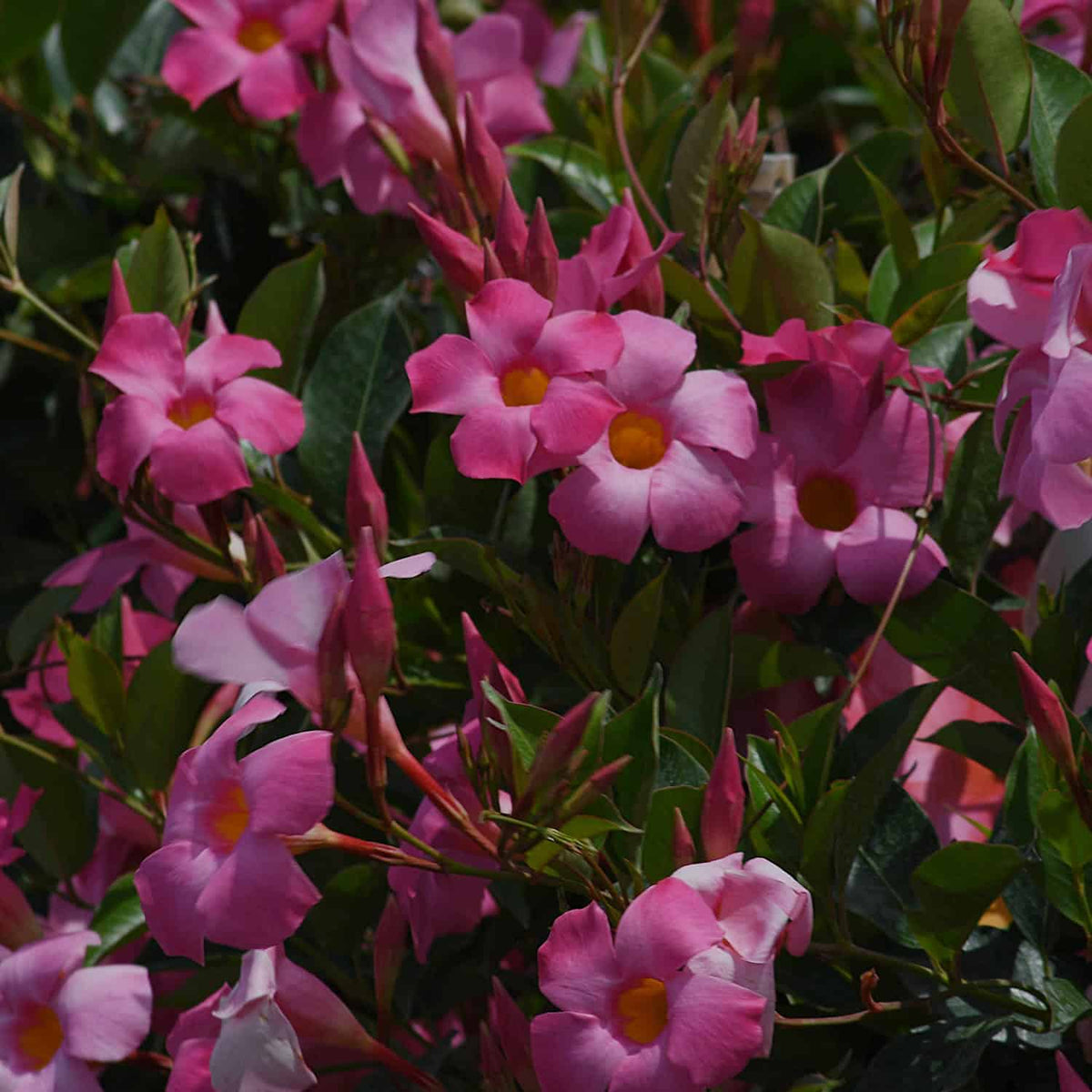
If you’re reading this, you’re already ahead of most people, these plants don’t die because winter is “hard,” they die because they get hit by cold nights too long before anyone reacts.
Want to shop now and plan later? Start here: Shop mandevilla & dipladenia plants.
If you already have a plant and want the full year-round routine (watering, light, feeding, pruning), bookmark these:
When to Bring Them Inside (Temperature Trigger + Pest Check)
The simple rule: bring mandevilla and dipladenia indoors before frost, and realistically, before nights consistently drop into the 45–50°F range.
Even if the plant survives a chilly night, cold stress can trigger:
- bud drop (buds fall off before opening)
- leaf yellowing and leaf drop
- slow recovery in spring
A smarter trigger than “first frost”
Don’t wait until the forecast says “frost.” If you see a week of nights hovering in the upper 40s, that’s your cue. You’re trying to move the plant while it’s still strong, not after it’s already stressed.
Before it comes inside: do a quick pest check
This matters more than people think. Indoor air is drier, predators are gone, and pests explode.
Take 5 minutes:
- Inspect undersides of leaves for webbing or speckling (spider mites)
- Look for clusters of tiny insects on new growth (aphids)
- Check leaf joints and stems for cottony fluff (mealybugs)
Quick clean-up (simple + safe): rinse the plant thoroughly with a hose (top and underside of leaves), let it dry, and remove any badly affected leaves. If you use any insecticidal soap, do it outside first and let the plant dry before bringing it in.
Leaf Drop: What’s Normal vs. What’s Not (Red Flags)
Expect some leaf drop. It’s common when tropical plants move from bright outdoor conditions to indoor light.
What’s normal after moving indoors
- some yellowing leaves, especially lower leaves
- slower growth
- fewer (or no) flowers through winter
What’s not normal (red flags)
- mushy soil that never dries (root trouble brewing)
- blackened stems or a bad smell from soil
- rapid leaf drop + limp stems (often overwatering + low light)
- fine webbing or heavy stippling (spider mites)
If you see red flags, the fix is usually not “more water.” It’s typically more light + less water + better drainage.
Indoor Setup That Works (Light, Temps, Drafts)
Your goal is not to make it bloom indoors. Your goal is to keep it healthy and stable until spring.
Light: the make-or-break factor
Pick the brightest spot you have, ideally a south- or west-facing window. These plants need strong light to stay leafy and avoid stretching.
If your indoor light is weak, don’t fight it, accept slower growth and focus on preventing root issues by watering less.
Temperature + drafts
- Aim for stable indoor temps (normal house temps are fine).
- Keep plants away from cold drafts near doors and single-pane windows.
- Avoid blasting heat vents directly at the plant (it dries foliage fast and can worsen mites).
One underrated move: rotate the pot
Turn the pot a quarter-turn every week or two so the plant doesn’t lean hard toward the window.
Winter Watering + Stopping Fertilizer
This is where most people accidentally kill the plant: they keep watering like it’s July.
Watering indoors (the “less, but consistent” rule)
Indoors, growth slows. Roots use less water. Soil stays wet longer.
Baseline indoor rhythm: water when the top 1–2 inches of soil are dry. Many homes land around every 10–14 days, but always use the soil test instead of the calendar.
How to water correctly:
- water slowly until water runs out the bottom
- empty any saucer so the pot never sits in water
Stop fertilizing in winter
Don’t feed while the plant is in low-light, slow-growth mode. Fertilizer salts can build up and cause leaf burn or stress.
When spring growth starts again and the plant is getting real sun, then you restart feeding.
For the full schedule and seasonal tweaks, keep these saved:
Spring Transition: When to Move Back Outside (And How to Harden Off)
This is the part people mess up in the opposite direction: they rush it outside on the first warm day and the plant gets shocked by cold nights or scorched by sun.
When to put mandevilla outside
Move it back outside when your nights are reliably above 50°F. If you’re in a cooler region, you may start by putting it outside during the day and bringing it back in at night for a week or two.
How to harden off (avoid sun scorch)
Indoor leaves are tender. Going straight to full sun can burn them.
Use this simple 7–10 day transition:
- Days 1–3: bright shade or morning sun only (1–2 hours)
- Days 4–6: increase morning sun and add a little midday brightness
- Days 7–10: work toward your final placement (often 6+ hours sun for best blooms)
When to prune in spring
If your plant got leggy indoors, spring is your reset moment.
- remove weak, thin stems
- trim long vines for shape and fuller branching
- don’t “hard prune” the day before intense sun—do it early in the transition window
When to restart fertilizer
Restart feeding when:
- the plant is outside (or under very strong light)
- you see active new growth
- you’re watering more frequently again
Busy-Person Overwinter Checklist
- Before winter: bring inside before nights hit ~45–50°F
- Pest check: rinse leaves, inspect undersides, remove damaged growth
- Indoors: brightest window, stable temps, avoid drafts/vents
- Water: top 1–2 inches dry; often ~10–14 days indoors
- Fertilizer: stop in winter; restart in spring with outdoor sun + new growth
- Spring move-out: nights reliably above ~50°F
- Harden off: shade → morning sun → full placement over 7–10 days
What to Buy If You Want an Easy Comeback in Spring
If you want vigorous growers that explode with blooms once they’re back in sun, these are solid picks:
Browse by type:
Want to shop the full hub? Shop mandevilla & dipladenia plants.


