


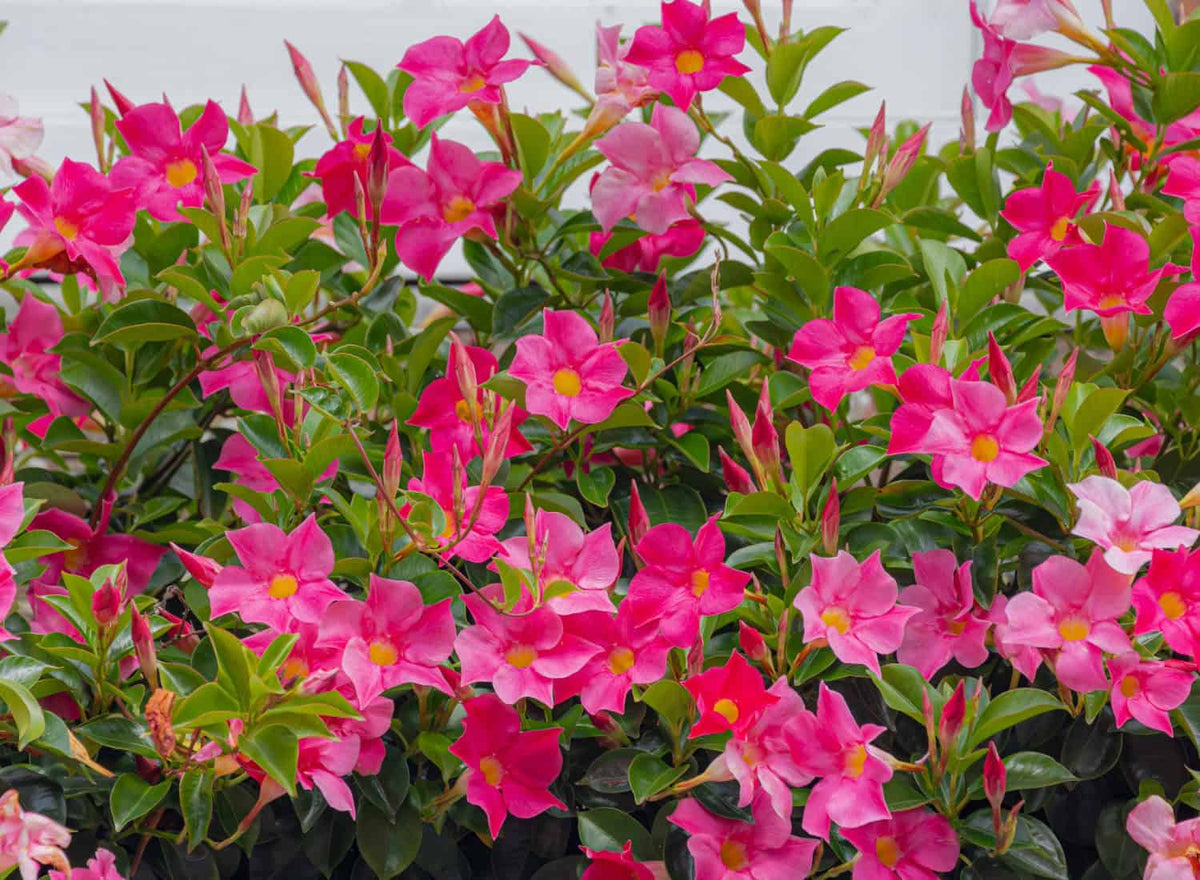
Ready to shop first and choose fast? Start here: Shop Dipladenia & Mandevilla Plants.
If you already own one and want the full routine for watering, light, feeding, and overwintering, use the Mandevilla Plant Care Guide (it covers the core rules that make both plants thrive).
The Quick Answer
If you remember just one thing, remember this:
- Mandevilla = climbing vine, dramatic height
- Dipladenia = compact, bushier, easier in containers
Choose mandevilla if you want vertical growth on a trellis, fence, pergola, or mailbox post.
Choose dipladenia if you want a fuller plant for patio pots, borders, or smaller spaces.
Why People Confuse Them (And Why It’s Not Your Fault)
These plants are closely related and often sold together. Both produce trumpet-shaped blooms and glossy tropical foliage. In many garden centers, they’re even mislabeled.
The mistake most people make is shopping by flower color instead of growth habit.
What actually matters: Are you growing vertically on a trellis? Or filling space in a container?
- Shop Mandevilla Vines & Baskets
- Shop Dipladenia Bushes & Baskets
- Shop Dipladenia Vines (Trellis-Ready)
The Real Differences That Affect Results
Growth Habit
Mandevilla: Longer stems, natural climber, best trained upward or allowed to trail dramatically.
Dipladenia: Shorter, fuller, stays more compact and controlled.
Best Use Cases
- Best for trellis: Mandevilla
- Best for pots: Dipladenia
- Best hanging basket: Either, depends on desired length
- Best balcony plant: Dipladenia
- Best dramatic entrance piece: Mandevilla
Cold Sensitivity
Both plants are tropical and sensitive to frost. If you’re outside warm climates, grow in containers so you can bring them indoors when temperatures approach the mid-40s to 50°F.
Care Basics That Make Both Bloom Heavily
Here’s the simplified version. For the complete routine, visit the Mandevilla Plant Care Guide.
Light
Strong light equals strong blooming. Outdoors, aim for 6+ hours of bright sun. In extreme heat, light afternoon protection can reduce stress.
Watering
Think even moisture, never soggy soil.
- If the top 1–2 inches are dry, water thoroughly.
- Allow full drainage in containers.
Soil
Well-draining soil is non-negotiable. Containers must have drainage holes.
Fertilizer
Consistent feeding during the warm season makes the difference between “healthy green” and “nonstop blooms.”
Pruning
- Mandevilla: Lightly train and trim for shape.
- Dipladenia: Minimal shaping keeps it tidy.
Note: Both produce a milky sap that can irritate skin. Wear gloves when pruning.
Which Is Easier for Beginners?
If you want the simplest success path, most gardeners find dipladenia easier because it naturally stays compact.
If you want height, drama, and tropical impact, mandevilla delivers.
Start Strong: What to Buy
Browse the full collection: Dipladenia & Mandevilla Plants for Sale
Want the full care routine next? Save the Mandevilla Plant Care Guide and keep blooms going all season.


