


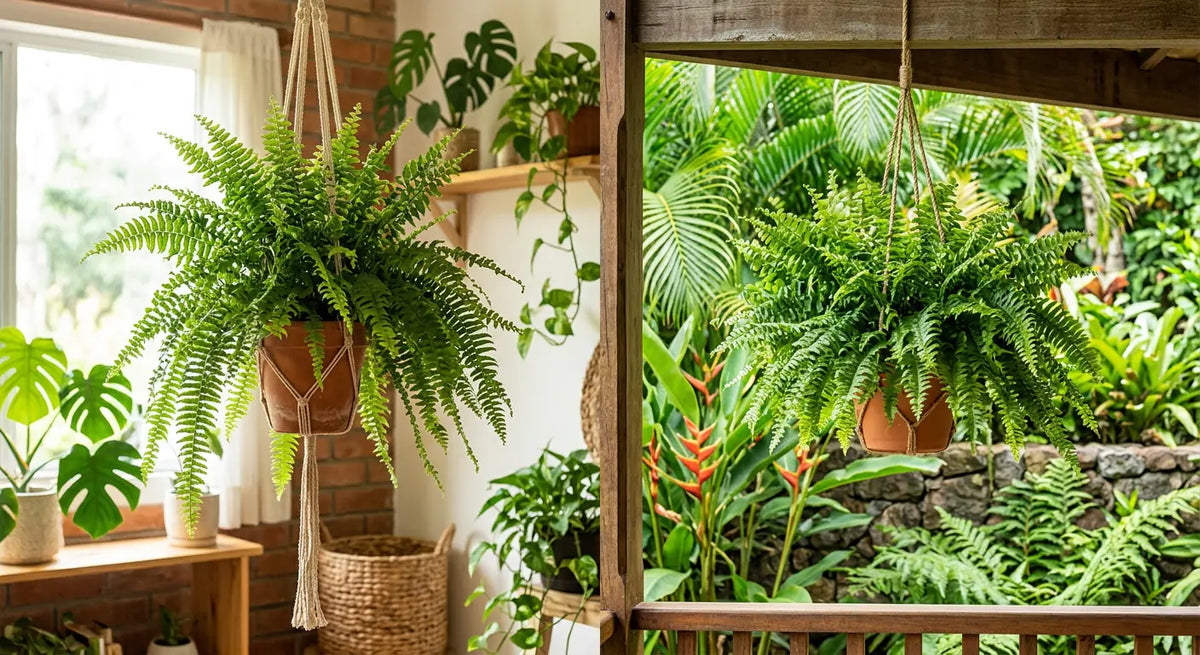
Most hanging ferns can grow both indoors and outdoors, but they thrive under different conditions. Outdoor hanging ferns typically grow larger thanks to brighter light, higher humidity, and better air circulation. Indoor hanging ferns often require more attention to watering and humidity but can provide beautiful year-round greenery when placed in the right location. Understanding the differences between indoor and outdoor care will help you choose the best fern for your space and keep it healthy throughout the year.
Whether you’re decorating a living room or front porch, browse our Hanging Fern Baskets. Find the perfect variety for your space.
Can Hanging Ferns Grow Indoors and Outdoors?
One of the biggest misconceptions about ferns is that they're either indoor plants or outdoor plants.
In reality, many of the most popular hanging fern varieties can thrive in both environments with proper care.
The difference isn't the plant itself; it's how you care for it.
Outdoors, ferns benefit from natural humidity, brighter indirect light, and increased airflow. Indoors, they rely entirely on you to provide the right balance of light, moisture, and humidity.
This flexibility is one of the reasons hanging fern baskets remain so popular among homeowners.
Outdoor Hanging Ferns: Bigger Growth and Seasonal Color
For many gardeners, outdoor hanging ferns provide the lush tropical look they're after.
When grown outside in bright shade, most fern varieties produce faster growth, fuller foliage, and richer green color throughout the growing season.
Covered porches, patios, pergolas, and shaded decks provide ideal conditions because they protect delicate fronds from harsh afternoon sun while still offering plenty of filtered light.
Outdoor hanging ferns are particularly popular for:
- Front porches
- Covered patios
- Screened porches
- Backyard entertaining spaces
- Poolside seating areas
If you're designing an outdoor living space, our guide to Best Outdoor Ferns will help you compare the top varieties for patios, porches, and landscapes.
Indoor Hanging Ferns: Year-Round Greenery
If you enjoy houseplants, indoor hanging ferns can bring softness and texture to almost any room. If you're still deciding which varieties perform best indoors, our guide to Best Indoor Ferns compares the easiest options for homes, apartments, and bright indoor spaces.
They work beautifully in:
- Living rooms
- Sunrooms
- Bathrooms
- Offices
- Bedrooms
- Apartments
Because indoor air is often drier than outdoor air, you need to choose a variety that does well at home. Pick one that can handle indoor conditions.
Bright, indirect light is usually the ideal location. South-facing windows with intense afternoon sun may scorch delicate foliage, while dark rooms often slow growth considerably.
Fortunately, several fern varieties transition indoors exceptionally well.
Which Hanging Fern Is Best Indoors?
If you're searching for the best hanging ferns for indoors, focus on varieties that adapt well to household humidity, indirect light, and consistent temperatures. While nearly all tropical ferns can spend time indoors, some perform much better than others as year-round houseplants.
Kangaroo Fern
Kangaroo Ferns are often among the easiest indoor hanging ferns because they tolerate indoor humidity levels better than many traditional fern species.
Their glossy foliage also gives them a unique appearance that complements modern interiors.
Kimberly Queen Fern
Kimberly Queen Ferns adapt surprisingly well indoors when placed near bright windows.
Their upright growth creates a cleaner appearance than many cascading fern varieties.
Boston Fern
Boston Ferns remain one of the most recognizable indoor hanging plants.
They appreciate higher humidity, making them excellent choices for bathrooms, sunrooms, or kitchens.
Which Hanging Fern Is Best Outdoors?
Many gardeners believe the best hanging ferns for outdoors are the varieties that thrive in bright shade while tolerating summer heat and humidity. Fortunately, several popular hanging fern baskets grow well on covered porches, patios, and shaded decks all season.
Natural humidity and brighter light encourage vigorous growth throughout spring and summer.
Macho Fern
If you're looking for dramatic tropical impact, few outdoor hanging ferns rival the size of a mature Macho Fern.
Its massive fronds quickly become a focal point on patios and porches.
Boston Fern
Boston Ferns have become a Southern porch tradition for good reason.
Their graceful arching fronds create lush hanging displays that thrive in bright shade.
Sprengeri Fern
Sprengeri Ferns provide a softer, cascading appearance while tolerating slightly drier conditions than many traditional ferns.
Light Requirements: The Biggest Difference
The biggest difference between indoor and outdoor fern care isn't watering.
It's light.
Outdoors, most hanging ferns thrive in:
- Bright shade
- Filtered sunlight
- Morning sun
- Protected afternoon shade
Indoors, the goal is to place your fern near a bright window without exposing it to prolonged direct afternoon sunlight.
If indoor light is limited, growth may slow, but you can still maintain healthy foliage with proper care.
Watering Changes Indoors and Outdoors
Another important difference involves watering. Outdoor hanging fern baskets dry much faster because sun, wind, and warmer temperatures expose them. Indoor baskets generally dry more slowly, especially during winter.
Instead of following a fixed schedule, check the top inch of soil regularly. Water thoroughly whenever it feels dry. For a complete routine, see our guide on How Often to Water Hanging Fern Baskets.
Humidity Matters More Indoors
Humidity is often the deciding factor between thriving indoor ferns and struggling ones.
Outside, humidity naturally rises after rain and during much of the growing season.
Inside, heating and air conditioning can dramatically dry the air.
If you notice:
- Brown tips
- Crispy foliage
- Dry edges
your fern may simply need more humidity rather than additional watering.
Bathrooms, kitchens, and humidifiers can all help create a healthier indoor environment.
Can Hanging Ferns Move Between Indoors and Outdoors?
Absolutely. One of the most common questions gardeners ask is, "Can hanging ferns stay outside?" The answer depends on your climate.
In warm regions, hanging ferns can stay outside year-round if temperatures remain above freezing. However, in areas with cold winters, you should bring tropical fern varieties indoors before frost arrives.
Many gardeners grow hanging fern baskets outdoors in spring and summer. Then they bring them indoors for winter. This helps the plants stay healthy all year. This seasonal transition works particularly well when you do it gradually.
When moving a fern outdoors:
- Begin in full shade.
- Slowly introduce brighter light over several days.
- Avoid immediate exposure to hot afternoon sun.
When bringing it indoors:
- Inspect for insects.
- Trim damaged fronds.
- Place the basket near a bright window.
- Reduce watering as growth slows.
Gradual transitions reduce stress and help prevent leaf drop.
Which Environment Is Easier?
The answer depends on your climate and your routine.
Outdoor growing is generally easier because nature provides the humidity and airflow that ferns love.
Indoor growing offers year-round greenery but often requires more attention to humidity and light.
Neither is necessarily better.
The best environment is simply the one that matches your home and the amount of care you're willing to provide.
The Bottom Line
When comparing indoor vs outdoor hanging ferns, there isn't a single right answer.
Most popular hanging fern varieties thrive outdoors during the growing season and many adapt beautifully indoors with proper care. Understanding how light, humidity, and watering differ in each environment keep your plants healthy anywhere you grow them.


