


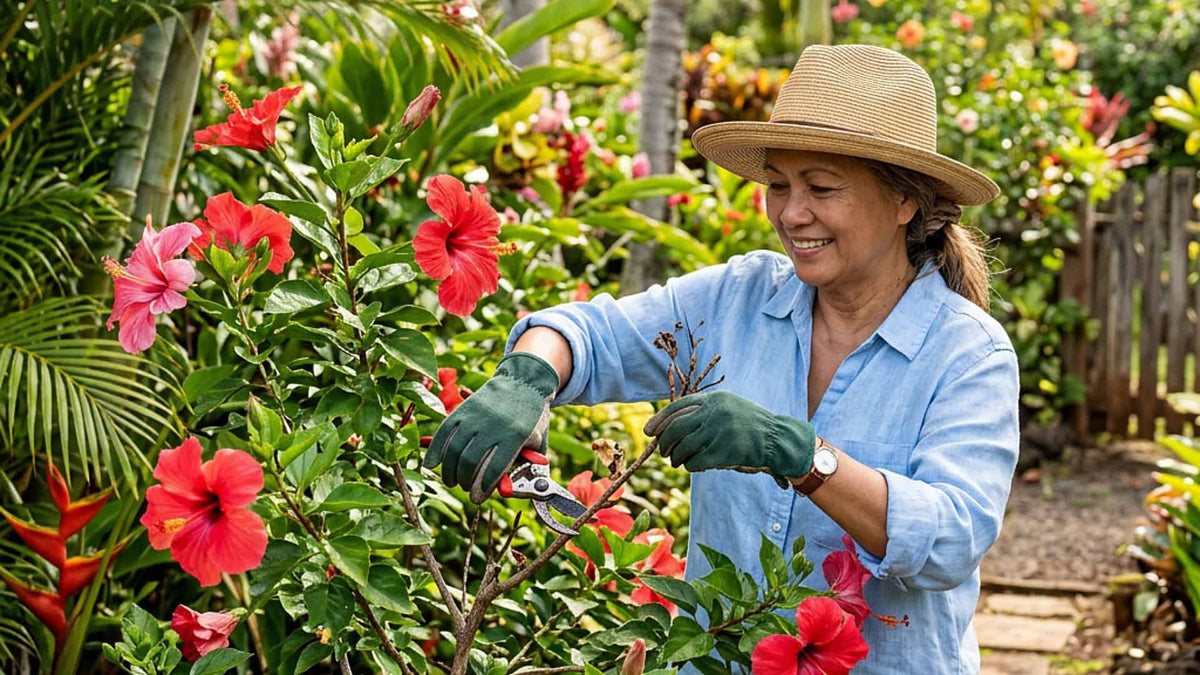
If you want more flowers on your tropical hibiscus, pruning matters, but timing matters more.
Done correctly, pruning encourages branching and increases bloom production.
Done at the wrong time (or too aggressively), it can temporarily reduce flowers.
Before diving in, if you’re expanding your collection this season, browse hibiscus plants for sale here.
For the full care routine that supports pruning (sun, water, fertilizer), visit the full hibiscus care guide here.
The Most Important Thing to Know
Tropical hibiscus blooms on new growth.
That means:
-
New stems = new flowers
-
Healthy branching = more bloom points
-
Controlled pruning = increased bloom potential
Pruning is not about cutting randomly.
It’s about encouraging fresh growth at the right time.
When to Prune Tropical Hibiscus
The best time to prune is:
✔ Early spring
✔ Just before strong growth resumes
✔ After overwintering indoors
Avoid heavy pruning during peak bloom season if your goal is maximum flowers right now.
Why? Because pruning forces the plant to regrow before it can rebloom.
Light Pruning vs Hard Pruning
Light Pruning (Most Recommended)
This is what most hibiscus needs.
-
Trim back leggy stems
-
Remove weak growth
-
Cut just above a leaf node
-
Encourage branching
Light pruning promotes fuller shape and more bloom points.
This is ideal for patio plants like:
👉 Hibiscus Bushes
Hard Pruning (Use Carefully)
Hard pruning means cutting back significantly, sometimes reducing the plant by one-third or more.
Only use hard pruning if:
-
The plant is overgrown
-
It has become woody
-
You are reshaping after winter
Expect delayed blooms after heavy cuts.
The plant must rebuild structure before producing flowers again.
How to Make the Cut Properly
Always:
-
Use clean, sharp pruning shears
-
Cut ¼ inch above a leaf node
-
Make clean, angled cuts
Each cut encourages two new branches below it.
More branches = more potential flowers.
How to Prune a Hibiscus Bush
Bush forms naturally grow full and multi-stemmed.
For bushes:
-
Remove weak interior stems.
-
Lightly shape outer growth.
-
Tip-prune to encourage branching.
Bushes respond beautifully to consistent, gentle shaping.
If you want a proven bloomer to practice on, this variety performs reliably:
👉 President Red Hibiscus Bush
How to Prune a Hibiscus Tree (Standard Form)
Tree forms require slightly different attention.
Browse tree varieties here:
👉 Hibiscus Trees
For trees:
-
Maintain a rounded canopy
-
Remove crossing branches
-
Avoid cutting into the trunk structure
-
Shape evenly for balance
Focus on canopy symmetry, not drastic reduction.
Because tree forms lift blooms higher, proper shaping increases visual impact.
The Secret to More Blooms: Tip Pruning
Tip pruning is the simplest bloom booster.
Here’s how it works:
-
Pinch or trim the soft tips of new growth
-
This encourages side branching
-
Side branches produce more buds
This technique works especially well early in the growing season.
You sacrifice one early bloom cycle for many more later.
How Often Should You Prune?
Light shaping: every few weeks during active growth
Major reshaping: once in early spring
Avoid constant heavy cutting.
Hibiscus thrives on steady structure, not constant correction.
Pruning Mistakes That Reduce Blooms
Avoid these common errors:
-
Pruning during peak flowering if you want immediate blooms
-
Cutting too much at once
-
Pruning late in fall before dormancy
-
Ignoring light exposure (no pruning fixes low sun)
-
Using dull tools that crush stems
Remember: sunlight drives blooms. Pruning supports it.
If your plant isn’t flowering at all, revisit your light exposure first.
What to Do After Pruning
After pruning:
-
Ensure strong sun exposure
-
Maintain even watering
-
Resume balanced fertilizer once growth begins
New growth should appear within 2–3 weeks in warm weather.
If growth stalls, check light and temperature before adjusting anything else.
Should You Prune Before Bringing Indoors?
Before winter:
-
Remove weak or damaged growth
-
Lightly shape
-
Avoid aggressive cuts
Heavy pruning before overwintering can stress the plant unnecessarily.
Major shaping is best saved for early spring.
How Pruning Affects Bloom Timing
Here’s what to expect:
-
Light pruning → small delay, fuller plant, more blooms
-
Heavy pruning → longer delay, stronger structure, later bloom surge
If you need blooms for a specific event, plan pruning accordingly.
Dwarf Hibiscus and Pruning
Compact varieties like those in the Yoder line:
👉 Yoder Hibiscus
typically require less pruning overall.
Because they grow more compactly, light tip pruning is usually enough to maintain shape.
They’re an excellent option if you prefer lower-maintenance shaping.
The Bloom-Boost Formula
If you want maximum flowering:
✔ 6–8 hours of sun
✔ Even moisture
✔ Proper fertilizer balance
✔ Early spring pruning
✔ Light tip shaping through season
Pruning alone doesn’t create blooms, but paired with the right care, it multiplies them.
Final Takeaway
Prune tropical hibiscus strategically, not aggressively.
Cut to encourage branching.
Shape to maintain structure.
Time pruning with the growth cycle.
Do that, and you’ll see:
-
Fuller plants
-
Stronger stems
-
More bloom points
-
Bigger floral displays
If you’re planning your next patio refresh, explore the full collection here:
👉 Tropical Hibiscus Plants
More blooms aren’t luck, they’re structure, sunlight, and timing working together.


