


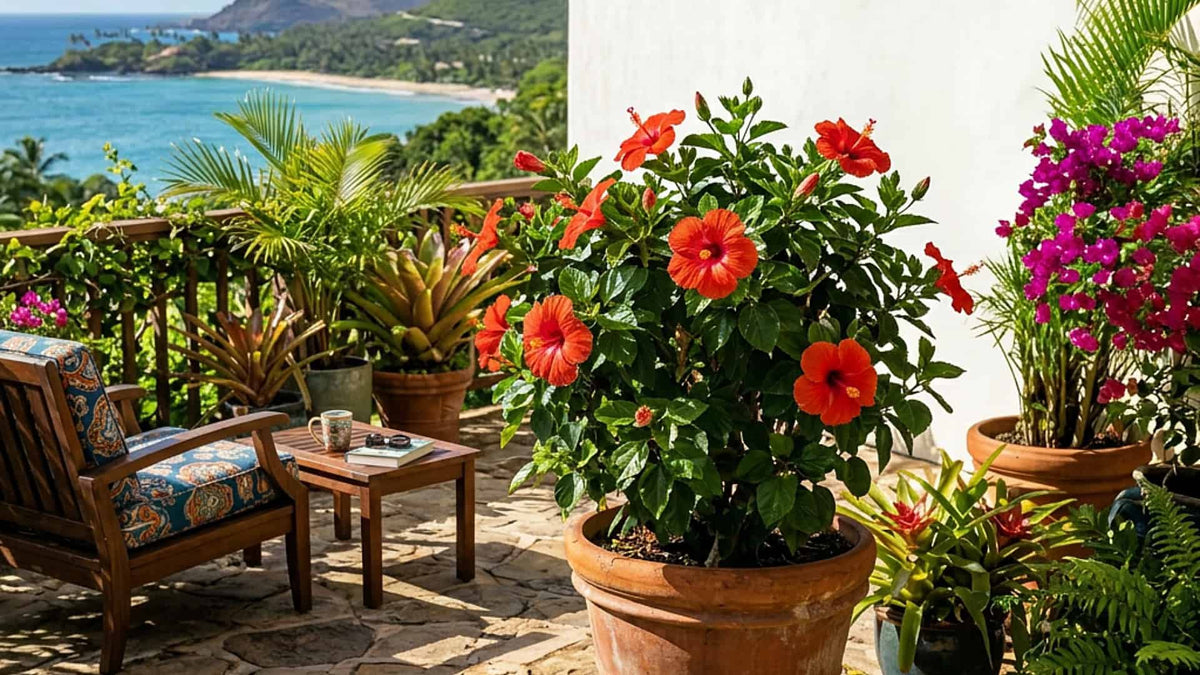
If your tropical hibiscus isn’t blooming the way you expected, sunlight is usually the reason.
Tropical hibiscus is a sun-loving plant — but there’s nuance. Too little light reduces flowers. Too much harsh exposure (especially after indoor wintering) can cause stress.
If you’re starting fresh or upgrading your patio display, browse hibiscus plants for sale here.
For the full year-round routine that works alongside proper light, bookmark the full hibiscus care guide.
The Short Answer: 6–8 Hours of Direct Sun
For peak blooming, tropical hibiscus needs:
At least 6 hours of direct sunlight daily
8 hours is ideal in most climates
Less than that? Expect fewer blooms.
Sunlight is fuel. The more consistent the light, the more consistent the flowering cycle.
What Happens If It Doesn’t Get Enough Sun?
Insufficient light leads to:
-
Lots of leaves, few flowers
-
Buds forming but dropping
-
Leggy, stretched growth
-
Slower overall development
If your plant looks green but bloom production is weak, check light exposure before adjusting fertilizer or watering.
This is especially common with indoor winter carryover plants.
Full Sun vs Partial Shade: What’s Better?
In most regions:
Full sun = best bloom performance
However, in extremely hot climates:
-
Afternoon shade can help prevent stress
-
Morning sun + bright afternoon shade works well
If leaves wilt heavily by mid-afternoon despite proper watering, light intensity may be too extreme.
Balance matters.
Patio Placement Strategy
If growing in containers, placement is everything.
Best options:
-
South-facing patios
-
West-facing exposure (with good airflow)
-
Open yards without overhead obstruction
Avoid:
-
Deep covered porches
-
Dense tree canopy
-
North-facing walls
A common mistake is placing hibiscus where it looks pretty — not where it performs best.
Bush varieties like these thrive in strong light:
👉 Hibiscus Bushes
Does a Hibiscus Tree Need More Sun Than a Bush?
No, both forms require the same light levels.
The difference is structural:
-
A hibiscus tree has a trained trunk and canopy
-
A hibiscus bush grows naturally fuller and lower
Both need strong sun for consistent flowering.
Browse tree forms here:
👉 Hibiscus Trees
Because tree forms lift blooms higher, they sometimes experience stronger wind and light intensity. Proper watering must match sun exposure.
How Sunlight Affects Bloom Cycles
Tropical hibiscus blooms on new growth.
Sunlight drives:
-
New stem production
-
Bud initiation
-
Flower size
-
Bloom frequency
Low light slows growth, which slows blooming.
High consistent light accelerates new growth, which increases flowering waves.
Light consistency is more important than occasional bursts of intense sun.
What About Indoor Light?
Indoor light is rarely enough to support peak blooming.
Even bright windows provide a fraction of outdoor sun intensity.
Indoors, expect:
-
Reduced flowering
-
Slower growth
-
Possible bud drop
If overwintering, survival is the goal, not peak bloom production.
Once moved back outside properly in spring, bloom cycles typically resume strongly.
Signs Your Hibiscus Is Getting the Right Amount of Sun
Healthy sun exposure produces:
-
Thick stems
-
Compact growth
-
Frequent bud formation
-
Deep green foliage
-
Consistent flowering
Weak light produces stretched stems and sparse blooming.
If your plant looks tall and thin rather than full and compact, light is likely insufficient.
Can Too Much Sun Hurt Hibiscus?
Yes, but usually only in two situations:
1. Sudden Exposure After Being Indoors
Plants must be hardened off gradually. Sudden full sun can cause:
-
Leaf scorch
-
Wilting
-
Shock
2. Extreme Heat + Poor Watering
If soil dries too quickly in intense sun, stress increases.
The solution isn’t always less sun, it’s improved watering consistency.
The Light + Water Connection
Sunlight increases water demand.
More sun = faster soil drying.
If your hibiscus sits in strong sun:
-
Check soil daily
-
Water when the top inch dries
-
Avoid letting it wilt repeatedly
Inconsistent watering in full sun causes bud drop.
That’s why light and water must be managed together.
Dwarf Hibiscus and Light Needs
Compact varieties, including those in the Yoder line:
👉 Yoder Hibiscus https://tropicalplantsofflorida.com/collections/yoder-hibiscus
still need strong sun.
Smaller size does not mean lower light requirement.
However, dwarf plants may dry out faster in containers due to smaller root mass.
The Ideal Bloom Formula
For maximum flowering:
✔ 6–8 hours direct sun
✔ Even moisture (never soggy, never bone dry)
✔ Proper fertilizer balance
✔ Stable warm temperatures
Sunlight is the foundation. Everything else supports it.
Quick Light Troubleshooting Checklist
If your hibiscus isn’t blooming, ask:
-
Does it receive at least 6 hours of direct sun?
-
Is that sun consistent daily?
-
Has its exposure changed recently?
-
Is it blocked by trees or structures?
-
Is it indoors too long into spring?
Light is almost always the first fix.
Final Sunlight Takeaway
Tropical hibiscus needs strong, consistent sunlight to perform.
If you give it:
-
6–8 hours of direct sun
-
Gradual transitions after winter
-
Balanced watering
You’ll get stronger stems, healthier foliage, and more blooms.
If you’re building a sunny patio display this season, explore the full collection here:
👉 Tropical Hibiscus Plants


