


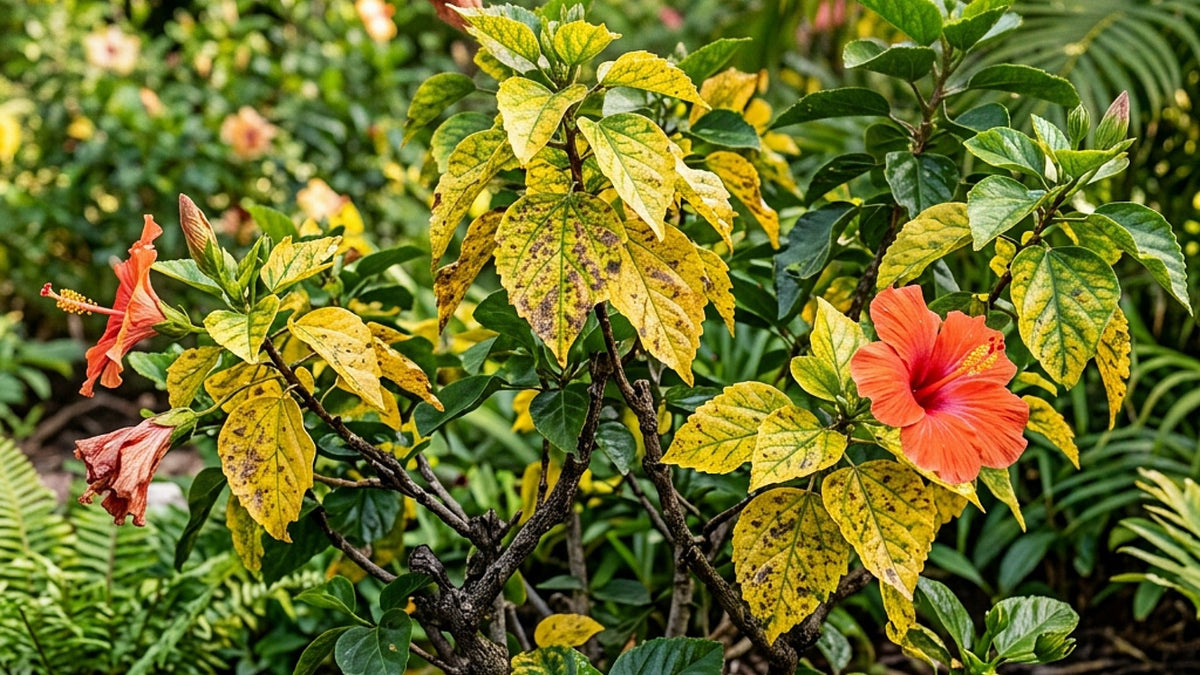
If your tropical hibiscus leaves are turning yellow, don’t panic.
Yellow leaves are a symptom, not the problem itself.
Most of the time, the fix is simple. The key is identifying which of the common causes is responsible.
If you’re troubleshooting a current plant or planning to add a healthier one to your patio, start here:
👉 Tropical Hibiscus Plants
And for the complete care routine that prevents most yellowing issues, bookmark:
👉 Tropical Hibiscus Care
The Fastest Diagnosis: Light + Water First
Before adjusting fertilizer or pruning anything, check:
-
Is it getting 6–8 hours of direct sun?
-
Is the soil staying soggy?
-
Is it repeatedly drying out completely?
Inconsistent light and inconsistent watering cause most yellow leaf problems.
Start there.
Cause #1: Overwatering (Most Common)
Overwatering is the number one reason tropical hibiscus leaves turn yellow.
What It Looks Like
-
Yellow leaves throughout the plant
-
Soft or drooping stems
-
Soil staying wet for days
-
Leaves dropping while still yellow
When roots sit in soggy soil, they can’t absorb oxygen properly. That stress shows up as yellowing.
How to Fix It
-
Let the top inch of soil dry before watering
-
Ensure drainage holes are clear
-
Empty saucers after watering
-
Avoid “just in case” watering
If growing in containers, this is especially important.
Bush varieties like these are very forgiving once drainage is corrected:
👉 Hibiscus Bushes
Cause #2: Underwatering (Also Common)
Repeated drought stress also causes yellowing.
What It Looks Like
-
Leaves turn yellow then crisp
-
Soil pulls away from pot edges
-
Buds drop before opening
-
Wilting during the hottest part of day
Hibiscus prefers even moisture — not extremes.
How to Fix It
-
Water deeply when top inch dries
-
In hot weather, check daily
-
Avoid letting it fully wilt repeatedly
Yellowing from drought often resolves quickly once watering stabilizes.
Cause #3: Not Enough Sun
Low light causes gradual yellowing, especially lower leaves.
What It Looks Like
-
Pale green leaves turning yellow
-
Leggy, stretched stems
-
Few or no blooms
-
Slower growth
Hibiscus needs strong sunlight to stay vigorous.
If your plant receives less than 6 hours of direct sun, light may be the issue.
Tree forms especially benefit from strong exposure:
👉 Hibiscus Trees
Fix
Move to a sunnier location gradually (avoid sudden full exposure if indoors).
Cause #4: Seasonal Stress (Normal Adjustment)
If you just:
-
Brought the plant indoors
-
Moved it back outside
-
Repotted it
-
Transported it
Some yellowing is normal.
Hibiscus reacts to environmental change.
What’s Normal
-
A few yellow leaves
-
Minor leaf drop
-
Temporary slowdown
What’s Not
-
Entire canopy turning yellow
-
Mushy stems
-
Persistent decline
Minor yellowing during transitions is usually temporary.
Cause #5: Fertilizer Imbalance
Too much nitrogen or improper feeding can create problems.
Too Much Nitrogen
-
Deep green leaves at first
-
Few flowers
-
Eventually yellowing lower leaves
Nutrient Deficiency
-
Pale overall color
-
Interveinal yellowing (yellow between veins)
-
Weak growth
Tropical hibiscus prefers balanced feeding with lower phosphorus and steady nutrients during the warm season.
If feeding has been inconsistent, revisit your full fertilizing schedule here.
Cause #6: Cold Stress
If temperatures dip too low, leaves may yellow and drop.
Cold exposure causes:
-
Sudden leaf yellowing
-
Leaf drop after cool nights
-
Growth slowdown
If nights fall below 50°F, tropical hibiscus begins to stress.
This is common in early spring and fall transitions.
Cause #7: Natural Leaf Replacement
Sometimes, yellow leaves are just aging out.
Lower leaves occasionally yellow and fall as the plant focuses energy on new growth.
If:
-
Only older leaves are yellowing
-
New growth looks healthy
-
Blooming continues
It’s likely normal turnover.
No intervention needed.
A Quick Yellow Leaf Troubleshooting Chart
If leaves are yellow and soil is wet → reduce watering.
If leaves are yellow and soil is dry → increase watering consistency.
If leaves are pale and plant is leggy → increase sunlight.
If yellowing follows a move → allow adjustment time.
If yellowing follows feeding → reassess fertilizer strength.
Start simple. Don’t change five things at once.
When to Remove Yellow Leaves
Remove leaves if they:
-
Are fully yellow
-
Are drooping
-
Are clearly not recovering
Use clean shears and cut close to the stem.
Removing damaged leaves helps redirect energy to healthy growth.
The “Reset” Plan If You’re Unsure
If you’re unsure what caused the yellowing:
-
Ensure drainage is clear.
-
Move plant to strong sunlight (gradually if needed).
-
Water only when top inch dries.
-
Pause fertilizer briefly if overfeeding is suspected.
-
Monitor for 10–14 days before making further changes.
Most hibiscus rebounds quickly once consistency is restored.
If You Want the Easiest, Most Forgiving Varieties
Some varieties tolerate minor inconsistency better than others.
Reliable performers include:
👉 President Red Hibiscus Bush
👉 Fiesta Hibiscus
Compact types like those in the Yoder line also adapt well:
👉 Yoder Hibiscus
Healthy plants recover faster from temporary stress.
Final Takeaway
Yellow leaves are usually a signal, not a disaster.
In most cases, the cause is:
✔ Overwatering
✔ Inconsistent watering
✔ Low light
✔ Seasonal stress
Correct the root issue, and the plant typically rebounds within weeks.
If you stabilize light, watering, and feeding, hibiscus is surprisingly resilient.
And once balanced again, it returns to what it does best, bold, tropical blooms.


