


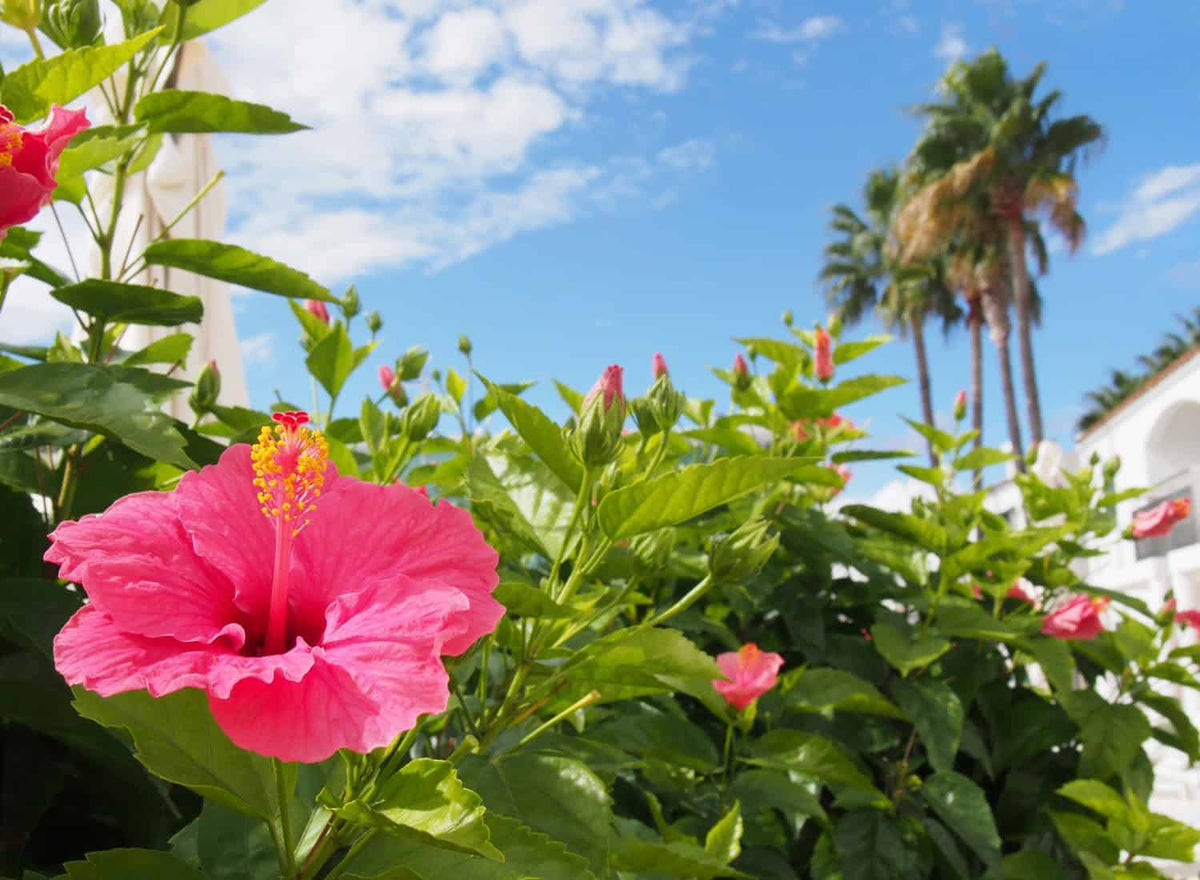
If you’re searching for the best fertilizer for tropical hibiscus, you’re likely chasing one thing: more blooms.
The good news? Tropical hibiscus is not difficult to feed, but it is easy to feed incorrectly.
The wrong fertilizer can give you lush green leaves and almost no flowers. The right one turns your plant into a bloom machine.
If you’re still choosing varieties, you can explore the full tropical hibiscus collection here.
And for the full light, watering, and pruning routine, bookmark the complete hibiscus guide here.
What Hibiscus Fertilizer Should Actually Accomplish
Fertilizer for tropical hibiscus should:
-
Support continuous blooming
-
Encourage strong new growth
-
Maintain deep green foliage without excessive leaf growth
-
Prevent nutrient deficiencies
Hibiscus blooms on new growth. Feeding correctly fuels that growth cycle.
The goal isn’t “more fertilizer.”
The goal is balanced feeding that prioritizes flowering.
The Label Basics (N-P-K) and What to Prioritize
Every fertilizer label shows three numbers:
N – Nitrogen (leaf growth)
P – Phosphorus (root and flower development)
K – Potassium (overall health and bloom support)
Many people assume hibiscus needs very high phosphorus for blooms. That’s a common mistake.
What to Avoid for Hibiscus (Common Mistake)
Avoid:
-
High-phosphorus fertilizers (very large middle number)
-
Lawn fertilizers high in nitrogen
-
Heavy “bloom booster” formulas overloaded with phosphorus
Excess phosphorus can interfere with nutrient balance over time and doesn’t necessarily increase flowering.
Too much nitrogen leads to:
-
Big, dark leaves
-
Rapid vegetative growth
-
Few blooms
That “all leaves, no flowers” look is usually nitrogen overload.
What to Look for Instead
The best fertilizer for tropical hibiscus:
-
Has balanced or slightly lower phosphorus
-
Includes adequate potassium
-
Provides micronutrients (iron, magnesium, etc.)
A balanced bloom-focused formula used consistently during the warm growing season produces better long-term results than extreme formulas.
A Simple Warm-Season Feeding Schedule
Tropical hibiscus feeds actively when it’s warm and growing.
Container Plants
For hibiscus in pots:
-
Feed lightly and consistently during spring and summer
-
Apply every 1–2 weeks (liquid) or as directed for slow-release
-
Reduce feeding as temperatures cool
Container plants rely entirely on what you give them.
Bush varieties, like those found here:
👉 Hibiscus Bushes
often grow vigorously and benefit from steady, moderate feeding.
If you’re growing a compact container favorite like:
👉 President Red Hibiscus Bush
consistent feeding makes a noticeable difference in bloom count.
In-Ground Plants
In-ground hibiscus:
-
Feed less frequently than containers
-
Still benefit from consistent warm-season feeding
-
May need supplementation in sandy or nutrient-poor soils
Trees, such as:
👉 Hibiscus Trees
especially benefit from regular feeding because canopy growth demands steady nutrients.
A statement piece like:
👉 Multicolor Hibiscus Tree
performs best when fertilized consistently during active growth.
Micronutrients and “Mystery Symptoms”
Sometimes the issue isn’t major nutrients, it’s trace elements.
When Leaves Pale
If leaves turn light green or yellow (especially between veins), the plant may be lacking:
-
Iron
-
Magnesium
This often shows up in container plants where nutrients leach out over time.
Using a fertilizer that includes micronutrients prevents this issue.
When Buds Form but Don’t Open
If buds appear but drop or fail to open:
-
Check watering consistency
-
Check light levels
-
Review fertilizer balance
Fertilizer alone rarely fixes bud drop. It works best when paired with proper light and watering.
Fertilizer Mistakes That Reduce Blooms
More fertilizer does not equal more flowers.
Overfeeding and Salt Buildup
Excess fertilizer can cause:
-
Leaf burn
-
Root stress
-
Salt accumulation in containers
-
Reduced blooming
If you suspect overfeeding:
-
Flush the soil thoroughly with water.
-
Pause fertilizing for 1–2 weeks.
-
Resume with lighter, consistent feeding.
Container plants are especially vulnerable to buildup.
Too Much Nitrogen and “All Leaves, No Flowers”
If your tropical hibiscus is lush but bloom-shy, nitrogen is often too high.
Symptoms:
-
Rapid leafy growth
-
Dark green foliage
-
Few buds
Switch to a balanced, bloom-focused formula and maintain consistency.
The Easiest Way to Keep Blooms Coming
Fertilizer is powerful — but it works best in combination.
Pair Feeding With Light + Watering Consistency
Even the best fertilizer for tropical hibiscus won’t produce flowers if:
-
The plant doesn’t get 6–8 hours of strong sunlight
-
Watering is inconsistent
-
Soil stays soggy
Blooms require:
-
Sunlight
-
Even moisture
-
Balanced feeding
That trio is the formula.
Find the full routine on keeping hibiscus blooming here.
What to Buy if You Want Reliable Bloomers
Some varieties respond especially well to consistent feeding.
Top performers include:
Healthy genetics + correct fertilizer = continuous color.
Final Fertilizer Takeaway
The best fertilizer for tropical hibiscus:
-
Is balanced
-
Avoids excessive phosphorus
-
Is applied consistently during warm months
-
Includes micronutrients
-
Is paired with proper sunlight and watering
Feed lightly. Stay consistent. Let the sun do its job.
And if you’re building your hibiscus collection, explore all tropical hibiscus plants for sale here.


