


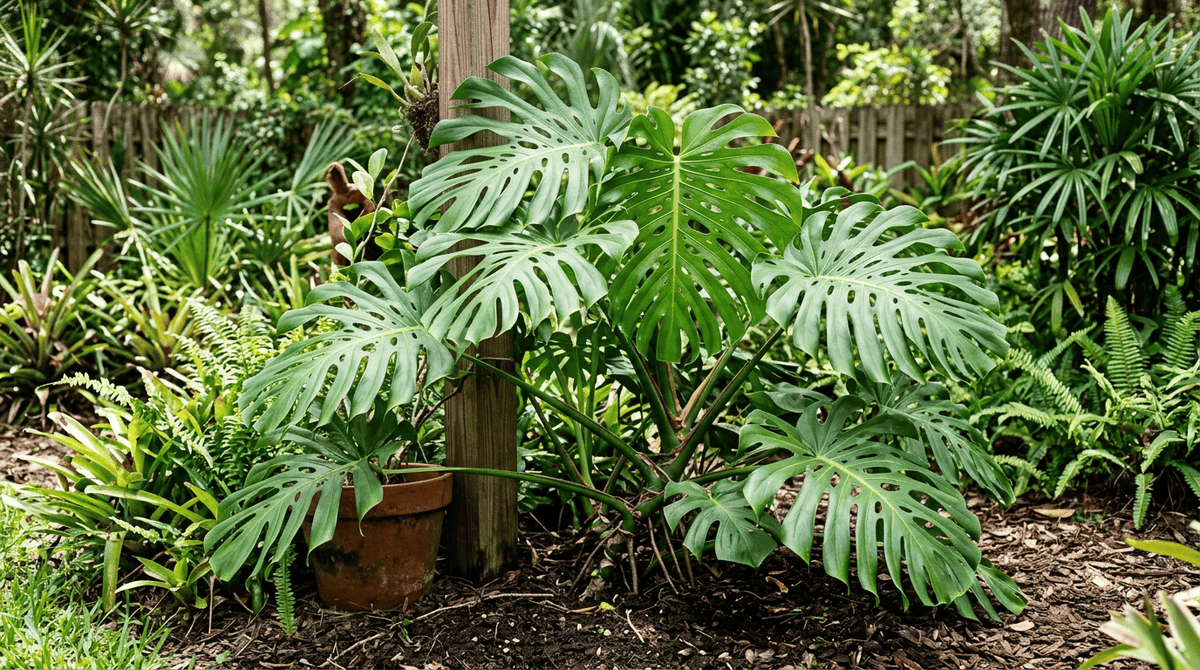
Monstera deliciosa can spend time outside in Florida, but it should be grown responsibly in a secure container rather than planted in the landscape.
Florida’s warmth and humidity can support vigorous Monstera growth, particularly in the southern part of the state. However, direct sun, heavy rain, cold snaps, and uncontrolled rooting can all create problems.
More importantly, the current UF/IFAS assessment of Monstera deliciosa classifies it as a high invasion risk in North, Central, and South Florida. UF/IFAS does not recommend the species for landscape use.
Florida plant owners can still enjoy a Monstera outside on a protected patio, porch, or similar managed space, provided the plant remains contained and cannot spread.
Can Monstera Live Outside Year-Round in Florida?
Whether a Monstera can remain outside year-round depends on its location and exposure.
In South Florida, a container-grown plant may tolerate outdoor conditions for much of the year if it is protected from direct sun, flooding, strong winds, and unusual cold.
Central Florida plants are more likely to need protection or temporary indoor shelter during cold weather. In North Florida, Monstera should generally be treated as a warm-season patio plant and brought inside before temperatures become too cool.
Microclimates also matter. A sheltered courtyard near a warm building may remain several degrees warmer than an exposed balcony or patio.
Even in South Florida, monitor forecasts and have a plan for unexpected cold fronts.
What Temperature Can Monstera Tolerate Outside?
Monstera deliciosa prefers warm conditions and should be protected when temperatures approach 50°F.
Penn State Extension recommends temperatures between 60°F and 85°F and notes that Monstera growth stops below approximately 50°F.
The University of Florida’s Monstera guidance reports that leaves may be damaged or killed at 30°F to 32°F, while stems can suffer damage at approximately 26°F to 28°F.
Do not use those damage thresholds as target temperatures. Bring a container-grown Monstera inside or move it into reliable protection well before freezing conditions arrive.
Our guide to Monstera temperature tolerance and cold protection will cover preparation and frost recovery in greater detail.
Where Should You Put a Monstera Outside?
Choose a sheltered location with bright, filtered light.
Suitable locations may include:
- A covered patio
- A screened porch
- A shaded balcony
- Beneath a roof overhang
- An enclosed courtyard with filtered light
Avoid prolonged direct afternoon sun. A Monstera grown indoors can scorch quickly when moved into Florida sunlight, even if the plant was previously kept near a bright window.
The University of Florida recommends filtered sunlight or light shade and warns that intense exposure can scorch the leaves.
Review our guide to Monstera light requirements before moving the plant into brighter outdoor conditions.
How Do You Move a Monstera Outdoors Safely?
Acclimate the plant gradually instead of moving it directly from an indoor room into strong outdoor light.
Begin in full shade for several days. Then introduce brighter filtered light in short periods while watching the foliage. Increase exposure gradually over one to two weeks.
Move the plant back into deeper shade if you notice:
- Pale or bleached areas
- Dry tan patches
- Crispy leaf edges
- Sudden curling
- Yellowing on the sun-facing side
Sunburned tissue will not recover, although future leaves should emerge normally after the plant is returned to suitable light.
Large leaves also catch wind easily. Place the container where it cannot tip, and move it into shelter before severe thunderstorms, tropical storms, or hurricanes.
How Often Should You Water an Outdoor Monstera?
Check an outdoor Monstera more frequently than an indoor plant, but water only when its growing medium begins to dry.
Heat and airflow may dry a container quickly. Florida humidity and summer rain can have the opposite effect, leaving the root ball wet for long periods.
Make sure the pot has unobstructed drainage holes. Empty saucers after rain, and do not allow the container to sit in water.
If the growing medium remains saturated, move the plant under cover until it dries appropriately. Constantly wet roots can decline even when the weather is warm.
Our Monstera watering guide explains how to test the soil and recognize overwatering.
Why Should Monstera Stay in a Container in Florida?
A container provides greater control over the plant’s roots, stems, and movement.
Monstera is a vigorous climbing vine. Aerial roots can attach to trees and structures or root into the ground when they make contact. Once established, the plant can become difficult to manage.
To grow Monstera responsibly in Florida:
- Keep it in a sturdy container with drainage
- Prevent aerial roots from entering the ground
- Do not allow it to climb landscape trees
- Remove unwanted flowers or fruit
- Collect pruned stems and cuttings
- Never dump plants or soil in natural areas
- Follow local guidance for disposing of unwanted plant material
Container growing also makes it easier to relocate the plant before cold weather or severe storms.
Our guide to how big a Monstera gets explains why planning for its mature size is important.
Can You Put a Monstera Outside for Summer?
Yes. In many parts of Florida and elsewhere, a Monstera can spend the warm season on a shaded patio or porch.
Wait until nighttime temperatures remain safely above 50°F, then acclimate the plant gradually. Inspect it regularly for pests, sunburn, wind damage, and excess rain.
Before bringing it indoors again:
- Inspect both sides of the leaves
- Check stems, supports, and the soil surface
- Remove dead plant material
- Treat visible pests
- Allow wet soil to drain
- Isolate the plant temporarily from other houseplants
This reduces the chance of bringing insects indoors.
Frequently Asked Questions
Is Monstera an Indoor or Outdoor Plant?
Monstera is a tropical vine that grows naturally outdoors but is widely kept as a houseplant. In Florida, responsible container growing is preferable to landscape planting.
Can Monstera Take Full Sun Outside?
Monstera may survive some direct sun after acclimation, but Florida’s intense midday and afternoon sun can scorch its leaves. Bright shade or filtered light is safer.
Can a Monstera Survive Florida Winter?
It may remain outside during mild South Florida winters, but cold fronts can still cause damage. Central and North Florida plants are more likely to need indoor protection.
Can You Plant Monstera in the Ground in Florida?
UF/IFAS currently classifies Monstera deliciosa as a high invasion risk throughout Florida and does not recommend it for landscape use. Keep it securely contained instead.
Does an Outdoor Monstera Grow Faster?
Warmth, humidity, and bright filtered light can increase growth. Too much sun, saturated soil, wind, or cold can damage the plant instead.
Enjoy Monstera Outside Responsibly
Monstera can enjoy Florida’s outdoor warmth, but it needs filtered light, excellent drainage, protection from cold, and responsible containment.
Keep the plant in a secure container, prevent roots and stems from escaping, and move it into shelter when weather conditions become unsafe.
For complete indoor and container care, visit our Monstera deliciosa care guide.
Explore our nursery-grown Monstera deliciosa plants and enjoy their tropical foliage in a thoughtfully managed space.


