


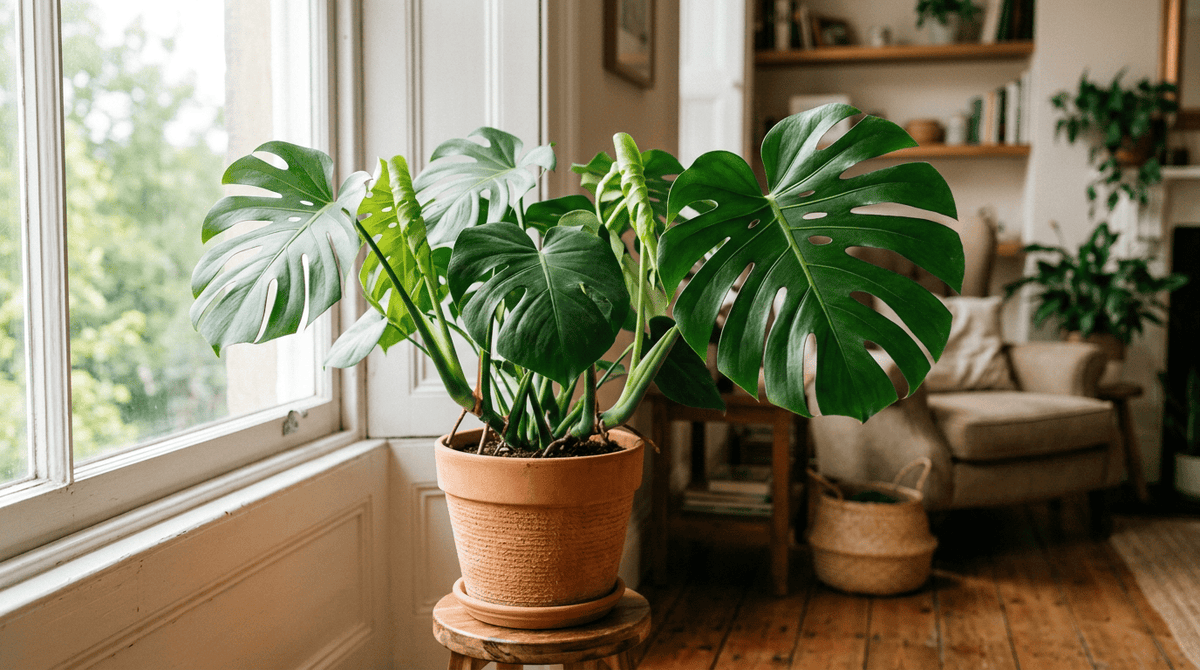
Monstera deliciosa grows best in bright, indirect light. Place it near a window where it receives abundant filtered light without prolonged exposure to intense midday or afternoon sun.
Understanding Monstera light needs is important because insufficient light causes slow, stretched growth, while excessive direct sunlight can scorch the foliage. The right balance encourages stronger growth, larger leaves, and more of the dramatic splits and holes known as fenestrations.
Monstera Light Needs: What Is the Ideal Amount?
The ideal Monstera light requirements are bright, filtered conditions for much of the day without hours of intense direct sun.
North Carolina Extension lists dappled sunlight and partial shade among the preferred conditions for Monstera deliciosa. These conditions resemble the filtered light the plant receives beneath a tropical forest canopy.
Suitable indoor locations include:
- Near an east-facing window
- A few feet from a south- or west-facing window
- Behind a sheer curtain in an intensely sunny window
- Near a bright window filtered by trees or an overhang
- Beneath a grow light in a darker room
Window size, curtains, trees, nearby buildings, and seasonal changes all affect indoor brightness. Our complete Monstera deliciosa care guide explains how light works with watering, soil, and temperature.
Does Monstera Need Direct Sunlight?
Monstera does not require direct sunlight to grow well. Bright, indirect light is safer and typically produces attractive indoor growth without unnecessary sunburn.
Gentle early-morning sun may be tolerated by a plant that has been introduced to it gradually. Prolonged midday or afternoon sun is much more likely to damage the leaves.
The University of Florida’s Monstera guidance states that the plant grows best under light shade or filtered sunlight and that intense exposure may cause leaf scorching.
When adjusting Monstera sunlight exposure, make changes gradually. Move the plant back or filter the window if pale, bleached, tan, or crispy patches appear.
Can a Monstera Grow in Low Light?
A Monstera may survive in moderate or low light, but it will not grow as vigorously.
Signs that a Monstera needs more light include:
- Slow or stalled growth
- Small new leaves
- Long spaces between leaves
- Stems stretching toward a window
- Few or no splits in new leaves
- Soil remaining wet unusually long
Low light also affects watering. A slowly growing plant uses less moisture, leaving its soil wet longer. Follow our guide to watering a Monstera and check the soil before adding water.
If mature leaves remain solid, learn more about why Monstera leaves develop splits and holes.
Can a Monstera Get Too Much Light?
Yes. Excessive direct sunlight can cause:
- Pale or bleached areas
- Dry tan or brown patches
- Crispy leaf edges
- Yellowing on the window-facing side
- Leaves curling away from the light
Sunburn will not disappear from an existing leaf. Move the plant into filtered light and monitor its new growth.
Do not automatically give a sunburned plant more water. Damaged leaves may look dry while the soil remains moist. Check the root zone before changing its watering schedule.
Where Should You Place a Monstera Indoors?
An east-facing window often provides gentle morning sun and bright indirect light. Near a south- or west-facing window, use a sheer curtain or move the plant far enough from the glass to avoid harsh rays.
A large, unobstructed north-facing window may provide adequate moderate light. A small or heavily shaded north window may be too dim for vigorous growth.
Illinois Extension identifies Monstera deliciosa as a bright-light houseplant and notes that trees, overhangs, and nearby structures can change the amount of usable window light.
These Monstera deliciosa light guidelines are starting points. Let the plant’s growth and leaf condition determine whether its location needs adjustment.
How Much Light Does a Monstera Need in Florida?
Florida’s strong sunlight makes filtering especially important.
Near an unshaded south- or west-facing window, a Monstera may need a sheer curtain or additional distance from the glass. On a screened porch or covered patio, provide bright shade or dappled light rather than prolonged direct sun.
Never move an indoor plant suddenly into Florida sunlight. Increase exposure gradually and monitor the leaves for bleaching or dry patches.
UF/IFAS currently considers Monstera deliciosa a high invasion risk, so Florida plants should remain securely contained. Our guide to keeping Monstera outside in Florida explains responsible placement and container care.
Can You Use a Grow Light for a Monstera?
Yes. A full-spectrum LED grow light can supplement a dim window or provide the plant’s primary light.
Position the fixture according to its manufacturer’s directions. Stretching toward the light suggests it may be too weak or distant, while bleaching can indicate excessive intensity.
Provide a consistent daily light period followed by darkness. Avoid leaving a grow light on continuously.
Frequently Asked Questions
Do Monsteras Need a Lot of Light?
Monsteras perform best with abundant bright, indirect light. They tolerate moderate light, but prolonged low light produces slower growth and smaller leaves.
Can a Monstera Be in Direct Sunlight?
Gentle morning sun may be tolerated after gradual acclimation. Avoid prolonged midday or afternoon sunlight.
Why Is My Monstera Leaning Toward the Window?
It is growing toward its strongest light source. Move it closer to bright indirect light or rotate it periodically.
Do Variegated Monsteras Need More Light?
Variegated Monsteras generally benefit from consistent bright, indirect light because their pale sections contain less chlorophyll. Strong direct sun can burn those same areas.
Give Your Monstera Bright, Filtered Light
The best light for Monstera deliciosa is bright and indirect. Filter harsh sun and adjust the plant’s location if its growth or foliage indicates a problem.
Meeting your Monstera’s light needs encourages larger leaves, steadier growth, and better fenestrations.
Explore our nursery-grown Monstera deliciosa plants and bring bold tropical foliage into your home.


