


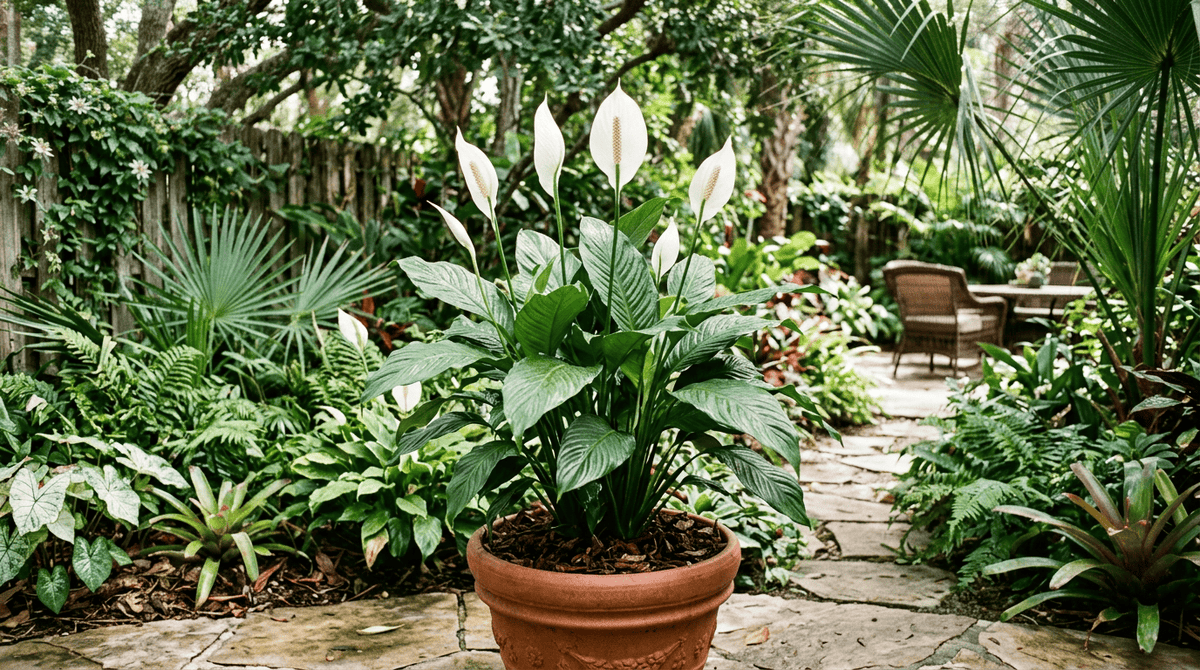
Peace Lilies can live outside in Florida when they are protected from direct sunlight, standing water, salt exposure, and cold temperatures. They perform best in warm, shaded locations with rich, well-draining soil.
In South Florida, Peace Lilies may remain outside throughout the year in protected locations. In Central and North Florida, container growing is usually safer because the plants can be moved indoors during cold weather.
Can Peace Lilies Be Planted Outside?
Yes, Peace Lilies can be planted outside in warm, frost-free climates. Their tropical background makes them well suited to Florida’s humidity and shade, but they are not tolerant of freezing temperatures or intense direct sun.
UF/IFAS lists Peace Lily, or Spathiphyllum, for year-round outdoor planting in USDA Hardiness Zones 10B through 12. Its Florida Peace Lily care guidance recommends well-drained soil, regular moisture, and no direct sunlight.
Gardeners outside those warm zones can still grow a Peace Lily outside in a container during suitable weather and bring it indoors when temperatures fall.
Can Peace Lilies Grow Outside Throughout Florida?
If you are asking, “Can Peace Lilies grow outside where I live?” your location within Florida matters.
South Florida
South Florida generally provides the most favorable conditions for permanent outdoor planting. Peace Lilies can grow beneath trees, on shaded patios, and in protected garden beds where freezing temperatures are unlikely.
Even here, avoid direct afternoon sun, salty coastal exposure, and low areas where heavy rain collects.
Central Florida
Protected Peace Lilies may grow outdoors successfully in parts of Central Florida, but winter cold fronts can damage the foliage. A location near a warm building or beneath an overhead canopy may offer some protection.
Container growing provides more flexibility. Plants can remain outside during warm weather and be moved indoors before unusually cold nights.
North Florida
A Peace Lily is generally safer as a container plant in North Florida. It can enjoy a shaded porch or patio during warm months but should be brought indoors before cold weather.
A freeze can kill the foliage and may destroy the entire plant. Do not rely on short-term frost cloth alone to protect a tropical container plant through prolonged cold.
How Much Shade Does a Peace Lily Need Outside?
A Peace Lily should receive full shade, bright shade, or filtered light outdoors. Direct midday and afternoon sunlight can bleach or burn its leaves.
Suitable locations include:
- Beneath a tree canopy
- On a covered porch
- Inside a shaded screen enclosure
- Beneath taller tropical plants
- On the north or east side of a building
- Near a bright wall without direct sun exposure
Gentle early-morning sun may be tolerated after gradual acclimation. However, a plant grown indoors should never be moved immediately into Florida sunlight.
Move it into a deeply shaded location first, then monitor the leaves. Pale patches, curling, crispy areas, or afternoon wilting can indicate excessive light or heat.
Our guide to Peace Lily light requirements explains how to recognize appropriate filtered light and sun damage.
What Temperatures Can Peace Lilies Tolerate?
Peace Lilies prefer warm, stable conditions. UF/IFAS lists 75°F to 85°F as their preferred temperature range and notes that active growth slows at or below 50°F. Some cultivars may suffer injury at approximately 35°F, and Peace Lilies are not freeze tolerant.
UF/IFAS production guidance also associates prolonged temperatures below 45°F with blackened foliage, stunted growth, and root damage. See its Spathiphyllum growing guidelines for more information about cold injury.
Move a container-grown plant indoors when forecasts approach 50°F, especially if it is young, recently repotted, or already stressed.
For a Peace Lily planted in the ground:
- Water appropriately before a cold front, but do not saturate the soil.
- Cover the plant when unusually cold conditions are expected.
- Anchor the covering so cold wind cannot lift it.
- Avoid allowing plastic to rest directly against the foliage.
- Wait until the danger of cold has passed before pruning damaged leaves.
Cold injury may appear as limp, dark-green, brown, or black tissue. Damage is not always visible immediately.
How Often Should You Water a Peace Lily Outdoors?
Outdoor Peace Lilies prefer evenly moist soil, but they should not remain waterlogged. Their needs change with temperature, rainfall, container size, and available shade.
Check the soil rather than watering automatically:
- Water when the upper layer begins to feel dry.
- Apply water thoroughly across the root zone.
- Let containers drain completely.
- Reduce irrigation after substantial rainfall.
- Check pots more frequently during hot, windy weather.
A Peace Lily on a covered porch may receive little natural rain, while one near the edge of a roof may receive too much runoff.
Florida’s summer storms can saturate containers quickly. Remove saucers that collect rainwater and make sure drainage holes remain open.
Our guide to how often you should water a Peace Lily explains how soil moisture, light, and container conditions should determine watering frequency.
What Soil Does an Outdoor Peace Lily Need?
Outdoor Peace Lilies need rich soil that retains some moisture but still drains freely. Dense soil and low planting areas can hold too much water around the roots during Florida’s rainy season.
When planting in the ground:
- Select a naturally well-drained location.
- Avoid depressions where rainwater collects.
- Incorporate organic matter when appropriate.
- Keep mulch from pressing against the plant’s base.
- Do not bury the crown more deeply than it grew in its container.
For containers, use a high-quality potting mix rather than garden soil. Make sure the pot has multiple drainage openings.
Our guide to the best soil for Peace Lilies provides a suitable container mixture and explains how Florida humidity affects drainage.
Can a Peace Lily Live Outside in a Pot?
Yes. If you are wondering, “Can a Peace Lily live outside without being planted in the ground?” container growing is often the best solution.
A container allows you to:
- Move the plant away from excessive sun
- Protect it during cold weather
- Control the soil and drainage
- Prevent competition from tree roots
- Relocate it during tropical storms
- Monitor moisture more easily
Choose a stable container that will not tip in strong wind. Avoid placing a small plant in an excessively large pot because unused soil can remain wet for too long.
If the roots circle the container or emerge through its drainage holes, consult our guide to repotting a Peace Lily.
Can Peace Lily Be Outside During Summer?
For anyone searching “Can Peace Lily be outside during summer?” the answer is generally yes, provided it receives shade and adequate drainage.
Introduce an indoor plant to outdoor conditions gradually. Start in deep shade for approximately one to two weeks. Even a shaded outdoor location may be considerably brighter than the room where the plant previously grew.
Inspect the plant regularly for pests before bringing it back indoors. Check the undersides of leaves and the areas where leaf stalks emerge from the base.
What Problems Affect a Peace Lily Outdoors?
Growing a Peace Lily outdoors exposes it to conditions that indoor plants rarely experience, including:
- Heavy rainfall and saturated soil
- Sunburn
- Cold fronts
- Wind damage
- Salt spray
- Slugs and snails
- Scale insects and mites
- Competition from nearby roots
Sudden wilting does not always mean the plant needs water. Check the soil first. A Peace Lily may wilt from heat while its soil remains moist, or it may droop because saturated soil has damaged its roots.
If the foliage collapses, use our guide to determine why your Peace Lily is drooping.
Can Peace Lilies Be Outside Year-Round?
So, can Peace Lilies be outside all year? In frost-free areas of South Florida, they can grow outdoors year-round in protected shade. Farther north, winter temperatures make container growing and seasonal protection safer.
The best outdoor location provides:
- Bright shade or filtered light
- Protection from direct afternoon sun
- Warm temperatures
- Moist but well-drained soil
- Shelter from wind and salt exposure
- A plan for unusually cold weather
With the right placement, a Peace Lily can become an attractive addition to a shaded Florida patio, entryway, or tropical garden.
Explore our nursery-grown Peace Lily plants for sale, shipped directly from our Florida nursery and supported by our complete Peace Lily care library.


