


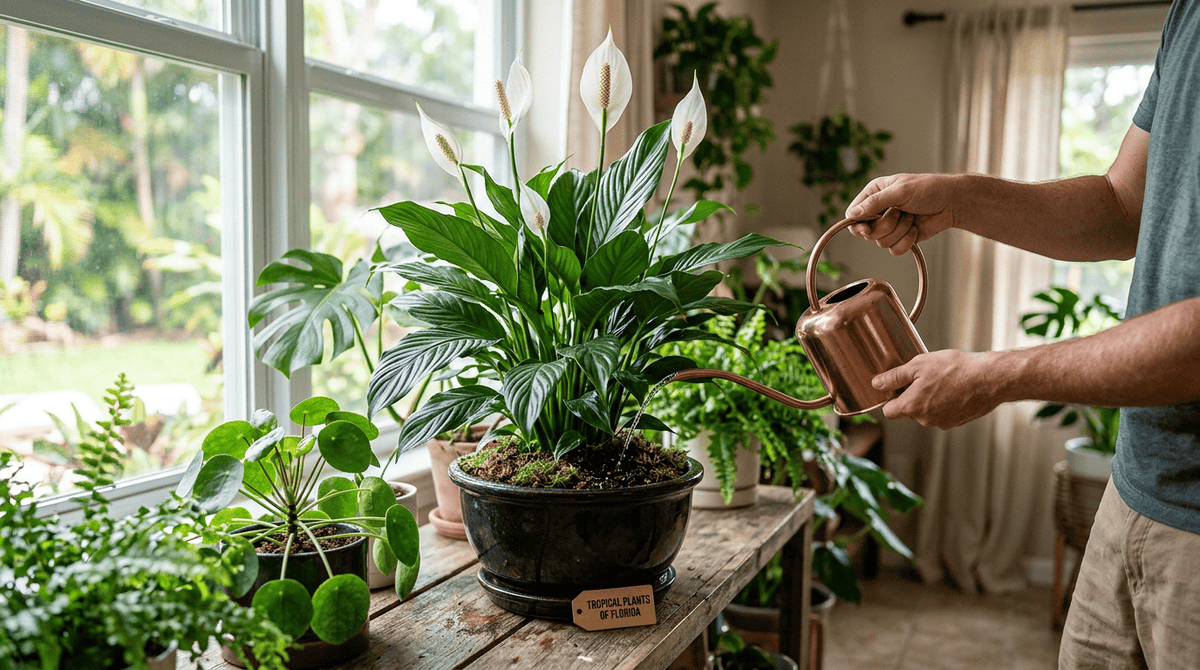
Water a Peace Lily when the upper inch of its soil begins to feel dry. For many indoor plants, that may be approximately once a week, but the correct timing depends on light, temperature, humidity, pot size, soil, and season.
The best way to determine how often to water Peace Lily plants is to check the potting mix instead of following a rigid schedule. Water thoroughly when the plant needs it, then allow the upper layer of soil to begin drying before watering again.
How Often Should You Water a Peace Lily?
Most indoor Peace Lilies need water every 7 to 10 days during active growth. However, some plants may need water sooner, while others may go two weeks or longer between waterings.
Before watering, insert a finger about one inch into the soil:
- If the soil feels slightly moist, wait and check again later.
- If the upper inch feels dry, water the plant thoroughly.
- If the soil feels wet or soggy, do not add more water.
Asking “How often do you water a Peace Lily?” is a useful starting point, but the calendar cannot account for changing conditions. The same plant may dry quickly during warm, bright weather and much more slowly in a cool or dim room.
Our complete Peace Lily care guide explains how watering works with the plant’s other care requirements.
How to Water Peace Lily Plants Properly
Learning how to water Peace Lily plants is just as important as knowing when to water them.
Pour water slowly and evenly across the surface of the potting mix. Continue until water flows freely through the drainage holes. This moistens the entire root ball and helps flush accumulated mineral salts from the soil.
Allow the container to drain, then empty any water collected in its saucer or decorative pot. Never leave a Peace Lily standing in water.
The University of Maryland Extension recommends watering indoor plants thoroughly so water drains from the container and discarding excess water from drainage saucers. Its guide to watering indoor plants also explains why both underwatering and overwatering can cause wilting.
Avoid giving the plant frequent, shallow sips. That practice may wet the surface without reaching the deeper roots.
What Changes a Peace Lily Watering Schedule?
There is no universal schedule for Peace Lily watering. Several conditions determine how quickly a plant uses moisture.
Light
A Peace Lily in bright, indirect light usually uses water faster than one in a dim room. More light supports more active growth and increases moisture use.
Low-light soil remains wet longer, so watering must usually be reduced. Our guide to Peace Lily light requirements explains how placement affects growth and moisture use.
Temperature and Humidity
Warm temperatures and moving air can make soil dry faster. A plant near an air-conditioning vent may also lose moisture quickly even when the room feels cool.
Florida humidity can slow evaporation, especially on shaded patios or in rooms without much air movement. Always check the soil instead of assuming warm weather automatically requires more water.
Pot Size and Material
Small pots hold less soil and generally dry faster. Large containers retain moisture longer, particularly when the plant’s root system has not filled the pot.
Terracotta allows moisture to evaporate through its porous sides. Plastic and glazed ceramic containers usually retain water longer.
Every Peace Lily container should have unobstructed drainage holes.
Potting Mix
Dense or compacted soil can remain wet around the roots for too long. An airy mixture balances moisture retention with the oxygen roots need.
If the soil stays saturated for many days or pulls into a hard mass when dry, it may be time to consult our guides to the best soil for Peace Lilies and repotting a Peace Lily.
Season
Peace Lilies commonly use more water during spring and summer when warmth and light support active growth. Water use often slows during fall and winter.
Indoor heating and air conditioning can alter this pattern, so soil condition remains more reliable than the month on the calendar.
How Can You Tell When a Peace Lily Needs Water?
A Peace Lily that needs water may display:
- Slightly drooping leaves
- Dry soil beneath the surface
- A noticeably lightweight pot
- Soil beginning to pull from the container
- Dry or browning leaf edges
Peace Lilies are known for dramatic wilting when they become too dry. Although the leaves may recover after watering, repeated collapse stresses the plant and may cause permanent brown edges.
UF/IFAS notes that a severely wilted Peace Lily may revive within hours after thorough watering but warns that frequent drooping can result in brown tips and edges. Its Spathiphyllum growing guidelines provide more information about moisture-related symptoms.
If your plant has already collapsed, use our guide to determine why your Peace Lily is drooping before automatically adding water.
What Does an Overwatered Peace Lily Look Like?
Signs of excessive moisture include:
- Yellow lower leaves
- Constantly wet soil
- A sour smell from the pot
- Fungus gnats around the soil
- Soft or dark roots
- Drooping that continues in wet soil
Overwatered roots receive too little oxygen and may begin to decay. Once the roots are damaged, they cannot absorb water efficiently, causing the foliage to wilt despite the wet soil.
Clemson Cooperative Extension recommends keeping Peace Lily soil moist but not soggy and allowing it to dry slightly between waterings. Its Peace Lily growing guide also warns against leaving the plant in standing water.
If yellowing or browning accompanies the problem, consult our guide to brown, yellow, and black Peace Lily leaves.
Do Peace Lilies Need Distilled Water?
Peace Lilies can develop brown tips when salts or certain minerals accumulate in the soil. Water quality varies significantly by location, so not every plant responds to tap water in the same way.
If your plant develops recurring brown tips despite appropriate watering, water quality may deserve closer attention. Our guide to using distilled water for a Peace Lily explains the differences among tap, filtered, distilled, and rainwater.
How Often Should You Water a Peace Lily Plant?
So, how often should you water a Peace Lily plant? Check the soil every few days and water when the upper inch begins to feel dry. For many indoor plants, this works out to approximately every 7 to 10 days, but the soil (not the calendar) should make the final decision.
Water thoroughly, let the excess drain, and adjust the timing as light, temperature, and growth change. This keeps the roots hydrated without leaving them trapped in saturated soil.
Explore our Florida-grown Peace Lily plants for sale, shipped directly from our nursery and supported by our growing collection of Peace Lily care resources.


