


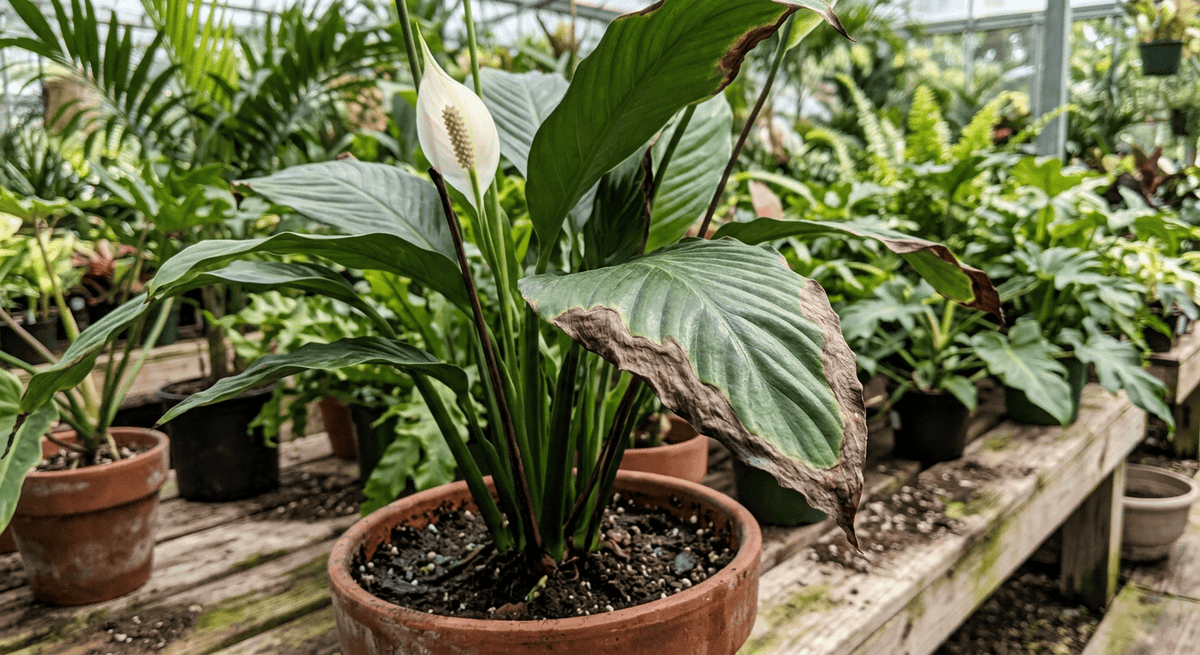
Peace Lily leaves commonly turn brown because of inconsistent watering, mineral buildup, excessive fertilizer, dry air, or too much direct sunlight. Brown tips are usually a sign of ongoing environmental stress, while larger brown areas can indicate damaged roots, sunburn, cold exposure, or advanced leaf decline.
When you notice Peace Lily leaves turning brown, look at the location and texture of the damage. A dry brown tip tells a different story than a soft black-brown patch or a leaf that first turned yellow.
What Causes Brown Tips on a Peace Lily?
Brown leaf tips are among the most frequent Peace Lily problems. Common causes include:
- Letting the soil become excessively dry
- Repeated cycles of wilting and watering
- Mineral or salt buildup in the soil
- Excessive fertilizer
- Low humidity
- Poor-quality water
- Hot or cold drafts
UF/IFAS notes that repeated severe drooping can result in brown leaf tips and edges. Its Spathiphyllum growing guidelines also identify excessive fertilizer and cold exposure as possible causes of root and foliage damage.
A small amount of browning does not necessarily mean the entire plant is unhealthy. Concentrate on correcting the cause and watching the new growth rather than expecting an already-brown tip to become green again.
Our complete Peace Lily care guide provides the plant’s broader requirements for water, light, soil, and temperature.
Are Browning Peace Lily Leaves Caused by Watering?
Both underwatering and overwatering can result in browning Peace Lily leaves.
When soil becomes too dry, the plant may droop dramatically and develop crispy brown tips or edges. When soil remains saturated, oxygen-starved roots can begin to decline. Damaged roots cannot supply the foliage properly, potentially causing yellowing, browning, or wilting.
Check the soil before changing your watering routine:
- Dry soil and a lightweight pot suggest underwatering.
- Wet soil and yellowing leaves suggest overwatering.
- Wet soil with a sour smell may indicate root damage.
- Soil that remains wet for many days may be too dense or poorly drained.
Our guide to how often you should water a Peace Lily explains how to judge moisture rather than relying on a fixed calendar.
If the entire plant has collapsed, determine why your Peace Lily is drooping before adding more water.
Can Tap Water Cause Peace Lily Brown Tips?
Water quality can contribute to brown tips, particularly when dissolved salts accumulate in the potting mix. Fertilizer and softened water can also increase salt levels.
UF/IFAS recommends allowing water to drain from the bottom of the container and notes that salt from softened water can damage plants. Read its guidance on brown leaf edges in Peace Lilies for more information.
Do not assume that every brown tip is caused by tap water. First check watering, drainage, fertilizer use, direct sunlight, and drafts.
If the problem continues, our guide to using distilled water for a Peace Lily explains when changing water may help and compares tap, filtered, distilled, and rainwater.
Why Are My Peace Lily Leaves Yellow?
If you are asking, “Why does my Peace Lily have yellow leaves?” begin with soil moisture and the age of the affected foliage.
A Peace Lily with yellow leaves may be reacting to:
- Soil that stays excessively wet
- Severe or repeated underwatering
- Natural aging of older leaves
- Low light
- Root damage
- Repotting stress
- Temperature extremes
- Nutrient problems
A single older leaf near the base may turn yellow naturally. Several yellow leaves appearing together, especially while the soil is wet, deserve closer attention.
When Peace Lily leaves yellow rapidly, inspect the drainage holes and make sure the plant is not sitting in collected water. Allow overly wet soil to begin drying before watering again.
The University of Maryland Extension explains that both overwatered and underwatered houseplants may wilt and that salt buildup can cause brown tips, lower-leaf loss, and root damage. Its guide to watering indoor plants provides additional diagnostic guidance.
What Causes Peace Lily Black Leaves?
Peace Lily black leaves can be a sign of more serious damage, particularly when the affected tissue is soft, wet, or spreading.
Possible causes include:
- Cold injury
- Severely overwatered soil
- Root or stem rot
- Direct contact with a cold window
- Advanced sunburn
- Physical injury followed by decay
- Leaf disease
UF/IFAS reports that cold and drafts can cause stunted growth, black areas on the leaves, and root death. Move a cold-stressed plant away from windows, exterior doors, and air-conditioning vents.
If the dark tissue is soft and the soil smells unpleasant, inspect the roots. Remove the plant from standing water and check whether its container drains properly.
Do not mistake a dry, dark-brown tip for active black rot. Texture, soil condition, and whether the damaged area is spreading are important clues.
Can Too Much Sun Turn Peace Lily Leaves Brown?
Peace Lilies perform best in bright, indirect light. Harsh direct sun can create pale, tan, or brown patches, particularly on the side facing the window.
Sunburn usually appears as a dry, sharply defined area rather than browning limited to the leaf tips. Damaged tissue will not recover, but moving the plant into filtered light can protect future growth.
Our guide to Peace Lily light requirements explains how to balance healthy growth with protection from direct Florida sunlight.
Should You Cut Brown or Yellow Leaves Off a Peace Lily?
A completely brown or yellow leaf will not become green again. Remove it using clean, sharp pruning shears, cutting the stalk near the plant’s base without damaging surrounding growth.
If only the tip is brown, you may leave it in place or trim the damaged edge for appearance. Follow the natural shape of the leaf and leave a very narrow brown margin rather than cutting into healthy green tissue.
Do not remove large amounts of foliage at once unless the leaves are completely dead or decaying. Green portions still help the plant produce energy.
How to Prevent Brown, Yellow, and Black Leaves
To prevent recurring discoloration:
- Check the soil before watering.
- Water thoroughly and let excess moisture drain.
- Never leave the pot standing in water.
- Use an airy, well-draining potting mix.
- Avoid excessive fertilizer.
- Provide bright, indirect light.
- Protect the plant from cold and direct airflow.
- Investigate persistent brown tips for possible water-quality issues.
- Inspect the roots if wet soil accompanies continued decline.
Clemson Cooperative Extension recommends keeping Peace Lily soil moist but not soggy and allowing it to dry slightly between waterings. Its Peace Lily growing guide also identifies excessive drying and overfertilization as causes of brown leaf edges.
Correcting the growing conditions will not erase existing discoloration, but healthy new leaves indicate that the plant is recovering.
Explore our Florida-grown Peace Lily plants for sale, shipped directly from our nursery and supported by our complete Peace Lily care library.


