


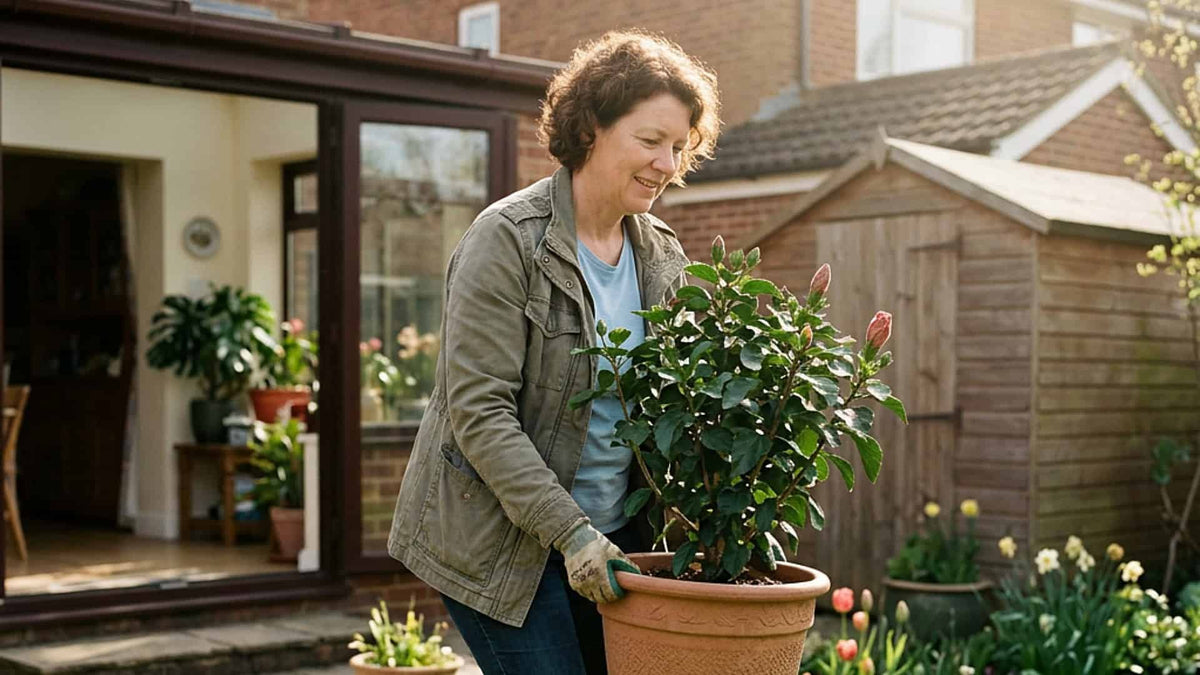
If you successfully overwintered your plant, the next big question is: when can I move my tropical hibiscus back outside?
Timing matters.
Move it too early and cold damage can set it back.
Move it too fast and harsh sun can scorch leaves.
Done correctly, spring transition actually accelerates blooming.
If you’re building your collection this season, browse hibiscus plants for sale here.
And for the full year-round care routine, bookmark this page.
The Golden Rule: Wait for Consistent Warm Nights
Tropical hibiscus is not frost tolerant.
Do not move it outside until:
-
Nighttime temperatures stay consistently above 50°F
-
Frost risk has fully passed
-
Soil temperatures are warming
One random warm day in March doesn’t count.
If nights are still dipping into the 40s, wait.
Patience here prevents weeks of recovery later.
Why Timing Matters More Than You Think
Cold stress causes:
-
Bud drop
-
Leaf yellowing
-
Growth stall
-
Delayed blooming
Even if frost doesn’t hit, prolonged cool nights slow root function. Hibiscus performs best once true warmth returns.
If you’ve overwintered a bush like this one:
👉 Fiesta Hibiscus Bush
you’ll notice it begins pushing stronger growth once temperatures stabilize.
Don’t Move It Straight Into Full Sun
This is the mistake most people make.
Indoor light, even bright windows, is dramatically weaker than outdoor sun.
Sudden exposure to full spring sun can cause:
-
Leaf scorch
-
Wilting
-
Rapid stress
You must reintroduce sunlight gradually.
The 7–10 Day Hardening Off Plan
Days 1–3: Bright Shade Only
Place your hibiscus:
-
Outdoors in bright shade
-
Under a covered patio
-
Against a shaded wall
No direct sun yet.
Bring it inside at night if temperatures are borderline.
Days 4–6: Morning Sun Only
Allow:
-
2–3 hours of gentle morning sun
-
Bright shade the rest of the day
Morning sun is softer and less intense than afternoon exposure.
Watch for wilting or leaf bleaching.
Days 7–10: Gradually Increase Sun
Increase exposure slowly:
-
Add an hour of sun every couple of days
-
Avoid sudden jumps to full afternoon sun
-
Monitor leaf condition daily
After about 7–10 days, your hibiscus can typically resume full sun.
What If Leaves Drop After Moving Outside?
Some leaf drop is normal during transition.
What’s normal:
-
A few yellow leaves
-
Minor bud drop
-
Temporary slowdown
What’s not normal:
-
Severe wilting that doesn’t recover
-
Blackened stems
-
Persistent droop after watering
Mild leaf drop is adjustment. Major collapse is stress.
Adjust Watering When It Goes Back Outside
Once your tropical hibiscus moves outdoors:
-
Water demand increases
-
Soil dries faster
-
Growth accelerates
Revisit your watering routine immediately.
Check soil daily in warm weather and water when the top inch dries.
Indoor watering habits will not work outside.
When to Resume Fertilizing
If you reduced feeding indoors during winter, resume once:
-
The plant is fully back outside
-
Night temps are consistently warm
-
New growth is visible
Feeding too early (while still indoors) is usually wasted.
Find everything you need to know about fertilizing hibiscus here.
Tree Forms Need Extra Attention
If you’re transitioning a standard or braided plant like those here:
👉 Hibiscus Trees
be especially careful with wind exposure.
Trees:
-
Have elevated canopies
-
Lose moisture faster
-
Experience more wind stress
Introduce wind gradually along with sunlight.
Dwarf Hibiscus Transitions Faster
Compact plants like those in the Yoder collection:
👉 Yoder Hibiscus
often adapt more quickly because:
-
They have smaller canopies
-
Less leaf mass
-
Lower overall stress
Smaller plants generally rebound faster in spring.
Signs Your Hibiscus Is Ready for Bloom Season
Once properly transitioned, you’ll notice:
-
New leaf growth at tips
-
Thickening stems
-
Bud formation
-
Faster water use
This is when the real show begins.
Healthy spring transitions often produce the strongest bloom cycles of the year.
The Biggest Spring Mistakes to Avoid
Avoid these and you’ll stay ahead of most growers:
-
Moving outside too early
-
Skipping the shade transition
-
Forgetting to increase watering
-
Over-fertilizing immediately
-
Ignoring wind exposure
Consistency wins again.
The Simple Spring Checklist
Before permanently leaving your hibiscus outside:
-
Frost risk is gone
-
Nights are above 50°F
-
It has been hardened off gradually
-
Watering frequency has been adjusted
-
Fertilizer schedule has restarted
Check all five and you’re safe.
Final Takeaway
The best time to move tropical hibiscus back outside is:
✔ After frost danger
✔ When nights stay warm
✔ After gradual sun reintroduction
Do not rush it.
A patient transition means:
-
Stronger roots
-
Faster bloom return
-
Less stress
-
Better overall plant health
If you’re expanding your patio setup this spring, browse the full hibiscus collection here.
Spring is when tropical hibiscus truly shines, but only if you transition it correctly.


